Modern commercial and industrial buildings depend on intricate structural systems to maintain long-term safety, operational continuity, and adherence to strict regulatory standards. Over years of service, roofs, support beams, concealed cavities, and load-bearing elements can develop subtle yet serious issues. These include corrosion, water intrusion, structural cracking, material fatigue, insulation breakdown, and hidden void damage.
Traditional inspection approaches often involve expensive scaffolding, invasive dismantling, or disruptive access that halts operations. Facility managers and maintenance teams are increasingly adopting industrial borescopes and Remote Visual Inspection (RVI) technologies. These tools deliver fast, precise, and completely non-destructive assessments.
Roof & structural inspection with industrial inspection cameras empowers engineers to detect hidden defects early, cut downtime, enhance inspector safety, reduce property damage, and strengthen predictive maintenance programs.
What Is Roof & Structural Inspection?
Definition of Roof & Structural Inspection
Roof & structural inspection involves systematically evaluating the condition, integrity, and safety of roofing systems, hidden building structures, and load-bearing components. It uses advanced visual inspection tools and diagnostic equipment.
This process covers key areas such as:
Roof cavities and attics
Steel frameworks and trusses
Concrete beams and columns
Support structures and joints
Hidden voids and interstitial spaces
Insulation layers and ventilation paths
Drainage systems and flashing details
Inspectors identify visible and concealed problems that could compromise building performance or safety.
Why Structural Inspection Is Important
Regular structural inspection delivers multiple critical benefits:
Prevents catastrophic structural failures
Significantly reduces long-term repair costs
Enhances overall building safety for occupants
Extends the useful lifespan of infrastructure
Ensures compliance with local and international regulations
Minimizes unplanned operational disruptions
| Inspection Objective | Operational Benefit |
|---|
| Crack detection | Prevent structural failure |
| Moisture inspection | Reduce water damage |
| Corrosion monitoring | Extend structural lifespan |
| Roof cavity inspection | Detect hidden deterioration |
| Drainage inspection | Prevent leakage problems |
Common Problems Found During Roof & Structural Inspection
Roof & structural inspection frequently uncovers issues that remain invisible from the exterior or standard access points. Early detection through tools like industrial borescopes prevents escalation.Water Leakage and Moisture Damage
Water intrusion ranks among the most common and destructive findings. Hidden roof leaks can saturate insulation, promote mold growth, accelerate corrosion in steel elements, and weaken wooden or concrete components over time. Moisture often travels far from the entry point, making it difficult to trace without remote visual tools.
Structural Cracks and Material Fatigue
Concrete cracking, steel fatigue, and hidden joint failures develop gradually due to load stress, thermal cycling, or seismic activity. These defects may start small but can compromise load-bearing capacity if left unaddressed.
Corrosion in Steel Structures
Rust development, coating deterioration, and moisture-related corrosion are prevalent in industrial environments. Corrosion weakens structural members and can remain concealed behind insulation or within cavities until advanced stages.
Insulation and Ventilation Issues
Poor insulation leads to thermal inefficiency, increased energy costs, condensation buildup, and restricted airflow. These problems accelerate other deterioration processes and affect indoor air quality.
Hidden Void Damage and Debris Accumulation
Inaccessible cavities often collect structural debris, dust, or even support pest infestations. These accumulations can obstruct drainage, add unintended weight, or harbor moisture that fuels further damage.
Challenges of Traditional Roof Inspection Methods
Conventional approaches struggle with the realities of modern building design.
Destructive Access Requirements
Many inspections require wall removal, ceiling dismantling, or roof panel openings. These invasive steps create additional repair needs and risk further damaging surrounding materials.
Limited Visibility in Hidden Areas
Confined spaces, dark roof cavities, and complex geometries limit what inspectors can see with flashlights or mirrors. Poor lighting exacerbates the problem.
Safety Risks for Inspection Teams
Working at heights, entering confined spaces, or navigating unstable structures exposes teams to falls, entrapment, or structural collapse hazards.
High Maintenance and Downtime Costs
Labor-intensive procedures interrupt operations, require extensive scaffolding or shutdowns, and generate substantial expenses even before repairs begin.
How Industrial Borescopes Improve Roof & Structural Inspection
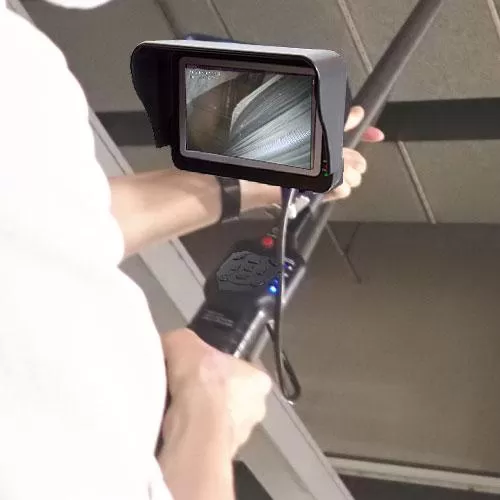
Industrial borescopes revolutionize roof & structural inspection by enabling non-destructive, high-quality remote visual access to otherwise unreachable areas.
Non-Destructive Remote Visual Inspection (RVI)
Borescopes insert through small existing openings or minimal access points, eliminating the need for destructive entry. Benefits include dramatically reduced repair costs, faster inspection cycles, minimal operational disruption, and more comprehensive coverage of complex structures.
High-Definition Imaging for Accurate Defect Detection
Contemporary industrial borescopes deliver HD or 4K resolution, powerful LED illumination, digital zoom, still image capture, and full video recording. These capabilities allow precise documentation and analysis even in low-light conditions.
| Detectable Issue | Inspection Capability |
|---|
| Structural cracks | Hidden damage analysis |
| Corrosion | Surface deterioration monitoring |
| Water intrusion | Moisture visualization |
| Insulation damage | Thermal system assessment |
| Debris accumulation | Preventive maintenance support |
Flexible Probe Navigation in Confined Structural Spaces
Small-diameter probes (often under 10mm), articulated insertion tubes, extended working lengths, and multi-angle tip controls let inspectors navigate tight bends and reach deep into cavities with ease.
Digital Reporting and Predictive Maintenance
Modern systems support image and video archiving, maintenance history tracking, cloud-based reporting, and even AI-assisted defect recognition. This data drives smarter, proactive maintenance strategies that reduce unexpected failures.
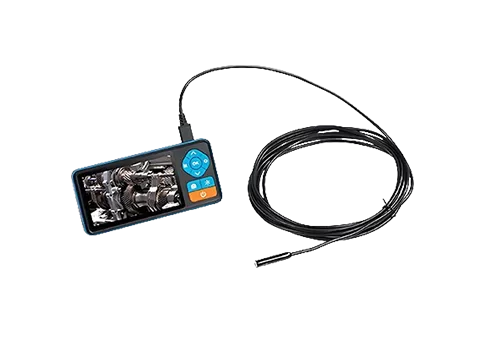
In modern building diagnostics, the adoption of a portable endoscope camera has significantly improved the efficiency and flexibility of roof & structural inspection tasks. Unlike traditional fixed inspection systems, a portable design allows engineers to quickly deploy visual diagnostics in confined spaces such as roof cavities, wall voids, and hidden steel frameworks without requiring complex setup or disassembly. Combined with industrial borescopes and Remote Visual Inspection (RVI) technology, the portable endoscope camera enables real-time high-definition imaging, accurate defect detection, and fast on-site decision-making. This makes it an essential tool for facility maintenance teams working in commercial buildings, industrial plants, and infrastructure projects where time, safety, and precision are critical.
Key Features to Look for in a Structural Inspection Camera
Choosing the right structural inspection camera or industrial borescope is essential for reliable results.
Small Probe Diameter
Narrow probes provide access to tight cavities with minimal intrusion into the structure.
High-Resolution Imaging
HD or better sensors combined with excellent low-light performance ensure clear defect visibility.
Flexible Articulation
Advanced articulation allows precise navigation and multi-angle views within hidden spaces.
Industrial Durability
Waterproof, dust-resistant, and rugged designs withstand harsh construction and industrial environments.
Data Recording and Connectivity
Wireless options, video recording, cloud export, and comprehensive documentation features streamline reporting and compliance.
Comparison Table:
| Feature | Consumer Inspection Camera | Industrial Borescope |
|---|
| Image Quality | Standard | HD/4K |
| Flexibility | Limited | Advanced articulation |
| Durability | Consumer-grade | Industrial-grade |
| Inspection Reach | Short | Long-distance |
| Reporting Capability | Basic | Professional |
Applications of Roof & Structural Inspection Across Industries
Roof cavity inspection and broader structural assessments apply widely.
Commercial Buildings
Focus on preventive maintenance, hidden leak detection, and long-term envelope integrity.
Industrial Facilities
Emphasize steel structure inspection, equipment support assessment, and rigorous safety verification.
Warehouses and Logistics Centers
Prioritize roofing integrity under heavy loads and structural load-bearing capacity.
Hospitals and Public Infrastructure
Stress building safety compliance, moisture prevention to protect sensitive environments, and continuous infrastructure maintenance.
Construction and Renovation Projects
Support quality assurance, hidden defect verification, and post-installation validation.
Step-by-Step Roof & Structural Inspection Workflow
A structured approach maximizes effectiveness.
Step 1 — Inspection PlanningConduct structural assessment planning, identify optimal access points, and perform thorough risk evaluation.
Step 2 — Equipment PreparationCalibrate the borescope, adjust lighting, and set up recording parameters.
Step 3 — Internal Structural InspectionPerform systematic crack scanning, moisture detection, and comprehensive cavity assessment.
Step 4 — Documentation and ReportingCapture high-quality images and video, generate detailed maintenance reports, and classify defects by severity.
Step 5 — Repair Planning and Preventive MaintenancePrioritize repairs, develop long-term preventive strategies, and schedule follow-up inspections.
Future Trends in Roof & Structural Inspection Technology
The field is advancing rapidly toward greater automation and intelligence.
H3: AI-Based Defect Recognition
Automated crack detection, corrosion analysis, and predictive diagnostics reduce human error and speed up reporting.
H3: Robotic Inspection Systems
Robotic crawlers and autonomous systems enable safer, more consistent cavity and structural inspections.
H3: Cloud-Based Inspection Management
Centralized platforms facilitate remote collaboration, real-time data sharing, and integrated predictive maintenance.
H3: Miniature Endoscope Camera Modules
Compact OEM endoscope camera modules support embedded systems and robotics integration for next-generation inspection solutions.
Why Industrial Buyers Choose MAIYIS for Roof & Structural Inspection Solutions
Professional Industrial Borescope Manufacturer
MAIYIS specializes in high-performance industrial borescopes and advanced visual inspection technologies tailored for structural inspection, building maintenance, HVAC, and confined-space applications. The company offers robust industrial-grade engineering, full OEM/ODM capabilities, customized solutions, and dedicated global B2B support.
MAIYIS Product Categories
Industrial Borescope: HD imaging, flexible articulation, long probes, and proven durability.
Veterinary Endoscopes: Precision optics for specialized applications.
Endoscope Camera Module: Compact HD modules ideal for OEM integration and automation.
Endoscope Application Solutions: Tailored systems for specific industry challenges.
MAIYIS Commitment to Quality and Innovation
MAIYIS upholds Quality through precision engineering and stable performance, Innovation by developing cutting-edge vision technologies, Integrity via transparent partnerships, rigorous Quality Control across the lifecycle, and Social Responsibility through sustainable practices.
Why Global Customers Work With MAIYIS
| MAIYIS Advantage | Customer Value |
|---|
| Industrial-grade manufacturing | Long-term reliability |
| OEM/ODM capability | Customized solutions |
| Advanced imaging technology | Accurate inspections |
| Strict quality control | Consistent product quality |
| Technical engineering support | Faster project deployment |
Explore MAIYIS Roof & Structural Inspection Solutions
Looking for a reliable industrial borescope supplier for roof and structural inspection projects? MAIYIS provides professional visual inspection solutions engineered for demanding industrial and building maintenance environments.
Explore MAIYIS industrial borescopes, endoscope camera modules, and customized systems to boost inspection efficiency while lowering maintenance costs and structural downtime.
Contact the MAIYIS team today to discuss OEM/ODM cooperation, technical specifications, or tailored roof and structural inspection solutions for your industry.