Modern industrial and commercial facilities are increasingly reliant on highly complex ventilation systems to maintain critical air circulation, temperature control, and safe operational environments. Whether operating a heavy manufacturing plant, a sterilized hospital ward, a hyper-scale data center, or a massive commercial skyscraper, the stability of an HVAC system directly dictates the facility's success. The performance of these hidden duct networks profoundly impacts Indoor Air Quality (IAQ), overall energy efficiency, equipment lifespan, workplace safety, and stringent regulatory compliance.
Despite its importance, traditional ventilation system inspection has historically been a logistical nightmare. Facility managers constantly battle with inspection blind spots, exorbitant maintenance costs, and prolonged operational downtime. Navigating narrow ductwork and gaining visual access without dismantling physical infrastructure has long been the primary bottleneck in HVAC maintenance. Furthermore, the lack of reliable visual documentation has made predictive maintenance nearly impossible.
What Is Ventilation System Inspection?
To optimize operational efficiency and safeguard facility health, maintenance teams must regularly deploy comprehensive visual diagnostics. Understanding the precise scope of these inspections is the first step toward better HVAC management.
Definition of Ventilation System Inspection
Ventilation system inspection refers to the systematic process of evaluating the internal condition, airflow performance, cleanliness, and structural integrity of HVAC ventilation networks using specialized visual inspection technologies and diagnostic tools.
Unlike simple external assessments, a true ventilation system inspection penetrates the core of the ductwork. Professional technicians actively search for hidden issues that degrade system performance, including heavy dust accumulation, chemical or moisture-induced corrosion, mold contamination, hidden air leakage, mechanical damage to internal dampers, severe blockages, and the presence of foreign objects (FOD).
Why Ventilation System Inspection Is Important
Ignoring the internal health of a ventilation network inevitably leads to systemic failure. Regular, documented inspections are critical for several operational reasons. First, they drastically improve indoor air quality by identifying and mitigating airborne contaminants before they circulate through a building. Second, identifying airflow restrictions and sealing hidden air leaks significantly lowers HVAC energy consumption. Furthermore, proactive visual assessments reduce catastrophic equipment failures, effectively extending the lifespan of expensive blower motors and filtration units while ensuring the facility meets strict building codes and occupational safety standards.
Table: Inspection Objectives and Business Benefits
| Airflow verification | Improved energy efficiency and reduced utility costs |
| Corrosion detection | Prevent sudden equipment failure and extend asset life |
| Dust and debris inspection | Better indoor air quality and lower health risks |
| Leak identification | Reduced thermal energy loss and stabilized pressure |
| Mold and moisture detection | Ensure stringent health, safety, and hygiene compliance |
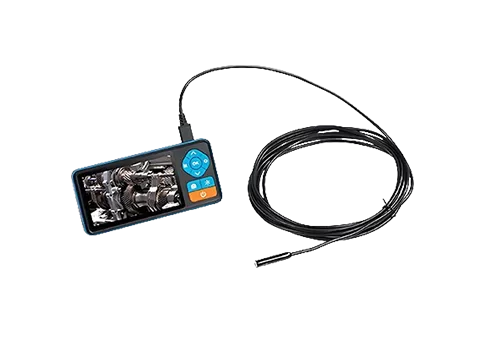
To overcome these structural limitations, industry leaders are turning to advanced diagnostic technologies such as industrial borescopes and IPS handheld digital endoscopes. The integration of the Industrial Borescope and Remote Visual Inspection (RVI) has revolutionized HVAC maintenance, allowing engineers to conduct highly efficient, non-destructive internal inspections without dismantling a single duct.
Common Problems Found During Ventilation System Inspection
Ventilation networks are subjected to constant airflow, fluctuating temperatures, and varying humidity levels. Over time, these environmental stressors manifest into distinct operational problems that demand immediate attention.
Dust and Debris Accumulation
In manufacturing and commercial spaces, industrial dust and microscopic debris naturally accumulate along the inner walls of ductwork. This buildup creates severe airflow restriction, forcing HVAC motors to work harder to push air, which in turn reduces overall cooling or heating efficiency. In worst-case scenarios, combustible dust poses a severe fire and contamination risk.
Corrosion and Structural Damage
Particularly in coastal regions or industrial plants handling harsh chemicals, ductwork is highly susceptible to metal deterioration. Vibration damage from powerful exhaust fans can weaken seams, while moisture-related corrosion slowly eats away at the galvanized steel, leading to structural failure and the release of rust particulates into the air stream.
Mold and Moisture Issues
When humidity control fails within an HVAC system, condensation forms inside the dark, insulated ducts. This creates the perfect breeding ground for mold and microbial contamination. If left unchecked, these biological hazards are blown directly into workspaces, triggering severe respiratory issues and violating health regulations.
Air Leakage and Pressure Loss
Over time, the seals and joints connecting long sections of ventilation ducts can degrade. This hidden air leakage results in massive energy waste, as climate-controlled air escapes into uninsulated ceiling cavities or crawlspaces, leading to highly inefficient HVAC performance and erratic temperature zones within the building.
Foreign Object Blockage
It is remarkably common to find unintended debris within ventilation systems. Construction debris left behind during building erection, loose thermal insulation that has detached from the duct walls, or damaged internal mechanical components can create severe blockages that entirely paralyze localized airflow.
Challenges of Traditional Ventilation Inspection Methods
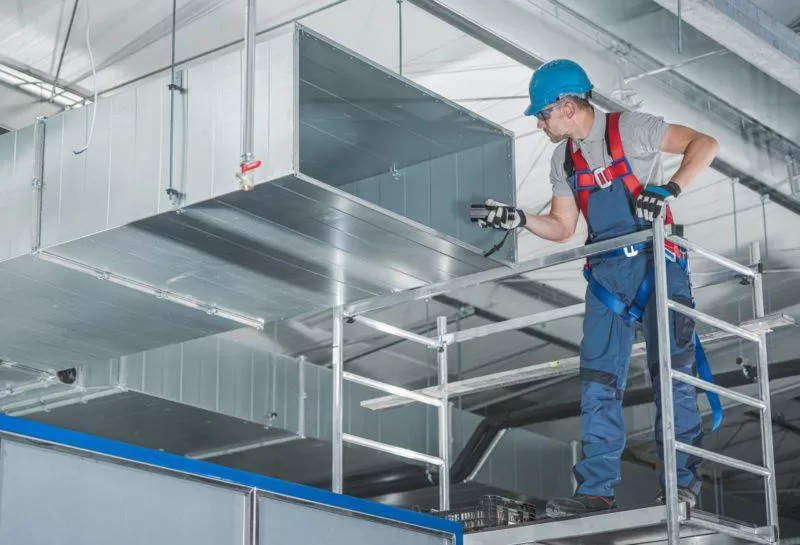
Before the widespread adoption of industrial endoscope inspection technology, facility teams were forced to rely on outdated, highly invasive methodologies that drained budgets and compromised safety.
Difficult Access Inside Complex Duct Systems
Modern commercial architecture and industrial plant layouts prioritize space efficiency, meaning ventilation systems are often buried behind walls, above suspended drop ceilings, or running through deep underground trenches. Accessing these long ducts, narrow pathways, multiple sharp bends, and elevated installations is physically impossible for human inspectors without specialized equipment.
Costly System Disassembly
When physical access is blocked, traditional maintenance requires destructive entry. Tearing down drywall, setting up scaffolding, and unbolting sealed duct joints is a labor-intensive inspection process. More critically, it demands that the HVAC system be shut down. In environments like semiconductor manufacturing or hospital operating rooms, this production downtime and operational interruption results in unacceptable financial losses.
Safety Risks in Industrial Environments
Manual inspection frequently forces technicians to enter dangerous environments. Working in confined spaces exposes personnel to hazardous airborne contaminants, low-oxygen environments, and extreme high-temperature environments. Relying on physical entry rather than remote visual inspection for HVAC dramatically increases the risk of workplace injuries.
Lack of Reliable Visual Documentation
Peering into a duct with a flashlight yields zero verifiable data. Traditional manual inspection limitations mean that maintenance teams suffer from inconsistent reporting. Without clear digital records or historical images to compare, engineers cannot accurately track the degradation of a ventilation system over time, making preventive maintenance an exercise in guesswork.
How Industrial Borescopes Improve Ventilation System Inspection
To circumvent the staggering costs and physical limitations of manual entry, modern facilities utilize the industrial borescope for HVAC diagnostics. This section details how these precision optical instruments fundamentally transform maintenance protocols.
Remote Visual Inspection Without Disassembly
The core advantage of an industrial borescope is its non-destructive nature. Industrial borescopes allow inspectors to access deep internal ventilation systems through small existing vents or minor access ports without dismantling ducts or shutting down entire HVAC operations. By deploying a ventilation inspection camera, facilities realize immediate commercial value: significantly reduced downtime, lower overall maintenance costs, and drastically faster inspection cycles. Engineers can literally "see" into the heart of the system while the facility continues to operate.
High-Definition Imaging for Accurate Defect Detection
In the pitch-black environment of an air duct, image clarity dictates the success of the inspection. Modern industrial borescopes are engineered with HD and 4K imaging sensors, surrounded by powerful, adjustable LED illumination arrays. This lighting cuts through the darkness, while digital zoom capabilities allow technicians to examine micro-fissures in welds. Crucially, these systems support seamless image capture and continuous video recording, ensuring that no detail is lost to human error.
Table: Detectable Defects and Inspection Advantages
| Corrosion & Rust | Early damage detection before structural failure occurs |
| Dust Buildup | Volumetric airflow analysis and targeted cleaning planning |
| Weld Cracks | Precision structural assessment of joints and seams |
| Moisture | Rapid source tracing for effective mold prevention |
| Blockages | Immediate identification to prevent severe airflow restriction |
Flexible Probe Navigation in Complex HVAC Systems
Ventilation ductwork is characterized by constant directional changes. A rigid inspection camera will fail at the first 90-degree turn. To solve this, industrial borescopes feature advanced 2-way or 4-way articulation capabilities, allowing the operator to steer the camera tip via a joystick. Combined with a long insertion tube and a remarkably small probe diameter, the camera can navigate past dampers, through multiple bends, and offer multi-angle viewing in the most complex HVAC networks.
Predictive Maintenance and Digital Reporting
The value of an inspection lies in the data it generates. Advanced borescopes capture and categorize visual evidence, enabling comprehensive maintenance history tracking. By maintaining an inspection image archive, facilities can track how fast a specific section of a duct is corroding. Coupled with emerging AI-assisted analysis, these digital records form the backbone of strategic preventive maintenance planning, shifting HVAC management from reactive emergency repairs to proactive asset protection.
Key Features to Look for in a Ventilation Inspection Camera
Procuring the right equipment is critical. When sourcing a commercial ventilation inspection camera or an industrial borescope, buyers must evaluate specific technical parameters to ensure the device can withstand industrial realities.
Probe Diameter and Working Length
The probe must offer compact access to enter through narrow vents, yet provide long-range inspection capabilities. Selecting a working length of 5, 10, or even 30 meters is often necessary to traverse commercial ductwork. Furthermore, narrow duct compatibility requires a small outer diameter to glide past internal obstructions without getting stuck.
Image Resolution and Lighting Performance
Grainy footage is useless for structural analysis. True HD or 4K imaging is essential. However, resolution must be paired with exceptional low-light capability and adjustable LED brightness to prevent glare when inspecting highly reflective galvanized metal ducts.
Articulation Capability
Navigating the labyrinth of an HVAC system requires mechanical agility. Look for systems featuring precision joystick-controlled articulation. Navigating bends and inspecting hidden corners is only possible with advanced multi-direction steering, allowing the camera to pan up, down, left, and right within the pipe.
Industrial Durability
Industrial HVAC systems are harsh environments. An IP67 protection rating is non-negotiable, ensuring the probe is entirely waterproof and dustproof. The insertion tube should be wrapped in industrial-grade materials, such as tungsten braiding, to protect the delicate internal cables from the sharp edges of sheet metal.
Data Recording and Connectivity
Modern inspections require modern workflows. The ideal system will feature robust data recording, wireless transmission to tablets, and easy USB export. These connectivity features streamline cloud reporting and ensure that high-quality inspection documentation can be instantly shared with off-site engineering teams.
Feature Comparison: Consumer Camera vs. Industrial Borescope
| Image Quality | Standard / Low resolution | True HD / 4K with anti-glare |
| Flexibility | Limited / Push-rod only | Advanced 360° joystick articulation |
| Durability | Low (Plastic housing) | Industrial-grade, Tungsten-braided |
| Inspection Depth | Short (1-3 meters) | Long-distance (up to 30 meters) |
| Reporting | Basic SD card saving | Professional documentation & wireless export |
Applications of Ventilation System Inspection Across Industries
The necessity of ventilation maintenance inspection extends far beyond standard office buildings, encompassing a vast array of specialized industrial sectors.
Manufacturing Facilities
In heavy industry, air quality is a matter of worker safety. Industrial ventilation inspection is critical for monitoring high-capacity dust extraction systems and chemical exhaust ventilation. Regular checks ensure precise production airflow control and prevent the buildup of highly combustible particulate matter.
Commercial Buildings
For expansive facilities like shopping malls and high-rise office buildings, consistent office HVAC maintenance guarantees occupant comfort. Inspecting hotel air circulation systems ensures that complex networks of ducts deliver clean, temperature-regulated air efficiently across hundreds of individual rooms without energy-wasting leaks.
Hospitals and Cleanrooms
Healthcare facilities operate under the strictest air quality regulations globally. Sterile airflow verification is a matter of life and death. Routine borescope inspections guarantee absolute contamination prevention and confirm the integrity of critical HEPA system ductwork in surgical theaters and pharmaceutical cleanrooms.
Data Centers
Hyper-scale data centers rely on massive cooling networks to prevent server failure. Inspecting these specific ventilation systems focuses on cooling airflow optimization. By visually confirming that sub-floor and overhead ducts are free from obstructions, facility managers guarantee essential overheating prevention for millions of dollars of IT infrastructure.
Energy and Power Plants
In the energy sector, industrial HVAC inspection solutions are deployed to verify ventilation reliability in extremely harsh, high-temperature zones. Ensuring that exhaust and cooling systems are structurally sound is critical for passing safety compliance audits and avoiding catastrophic plant shutdowns.
Step-by-Step Ventilation System Inspection Workflow
To maximize the efficacy of your HVAC ventilation inspection equipment, professional engineering teams follow a highly structured, repeatable workflow.
Step 1 — Inspection Planning
The process begins with a comprehensive system layout review using architectural HVAC blueprints. The engineering team establishes strict inspection target definitions and identifies the most strategic, least invasive access point identification (such as existing service hatches or diffuser grilles).
Step 2 — Equipment Preparation
Prior to insertion, technicians perform mandatory borescope calibration. This includes verifying the articulation mechanics, optimizing lighting adjustments for the specific material of the duct, and ensuring the digital recording setup is initialized with the correct metadata for the facility.
Step 3 — Internal Visual Inspection
The articulating probe is carefully advanced into the ductwork. The technician conducts a systematic defect scanning process, looking for corrosion or weak joints, performing an airflow obstruction check, and utilizing continuous video capture to record the entire journey through the system.
Step 4 — Defect Documentation
When an anomaly is discovered, the operator pauses to conduct precise image recording. Notes, measurements, and severity ratings are often annotated directly onto the image via the borescope interface, accelerating the final maintenance report generation process.
Step 5 — Maintenance Decision and Repair Planning
Armed with definitive visual evidence, facility managers transition to action. They use the data to establish targeted cleaning schedules, issue accurate repair recommendations for localized damage, and refine their long-term predictive maintenance planning.
Future Trends in Ventilation System Inspection Technology
The landscape of industrial inspection is rapidly evolving, driven by advancements in automation, data processing, and optical miniaturization.
AI-Based Defect Recognition
Artificial intelligence is transforming raw visual data into actionable intelligence. Upcoming software platforms feature automated crack detection and sophisticated image analysis, allowing the system to provide real-time anomaly recognition, effectively highlighting defects that the human eye might miss.
Robotic Inspection Systems
For incredibly long or highly hazardous duct networks, crawler robots and autonomous HVAC inspection devices are becoming the norm. These remote-controlled systems, equipped with high-performance endoscope cameras, can drive through miles of ductwork without human intervention.
IoT and Cloud-Based Inspection Management
The integration of IoT (Internet of Things) allows for instant, centralized reporting. Inspection data is pushed directly to the cloud, enabling global engineering teams to leverage predictive analytics and conduct remote maintenance management across multiple international facilities simultaneously.
Miniature Endoscope Camera Modules
As commercial systems become more compact, the demand for ultra-small visual access grows. Manufacturers are developing compact HD imaging modules designed specifically for robotic integration, empowering developers to create highly specialized OEM inspection devices for bespoke HVAC architectures.
Why Industrial Buyers Choose MAIYIS for Ventilation System Inspection Solutions
When building a robust, long-term HVAC maintenance strategy, partnering with a proven, globally recognized equipment manufacturer is vital. MAIYIS delivers unparalleled visual diagnostic power to industrial sectors worldwide.
Professional Industrial Borescope Manufacturer
MAIYIS specializes in the research, development, and production of cutting-edge industrial borescopes and visual inspection technologies. Explicitly designed for rigorous HVAC systems, industrial maintenance, and remote visual inspection applications, our equipment is built to perform where others fail. With a foundation of industrial-grade engineering, expansive OEM/ODM capability, and dedicated global B2B support, MAIYIS provides customized inspection solutions that perfectly align with your operational demands.
MAIYIS Product Categories
MAIYIS offers a diverse portfolio of professional vision solutions:
: The ultimate tool for HVAC inspection, featuring high-definition imaging, flexible 360-degree articulation, long insertion probes, and uncompromising industrial durability.
Veterinary Endoscopes: Delivering precision imaging systems and highly reliable optical performance tailored for the veterinary medical sector.
: Compact HD imaging modules providing comprehensive OEM integration support for robotics and advanced automation applications.
Endoscope Application Solutions: Fully customized inspection systems tailored to deliver industry-specific visual inspection solutions for unique engineering challenges.
MAIYIS Commitment to Quality and Innovation
Our corporate philosophy is embedded into every device we manufacture:
Quality: Ingenuity and precision ensure stable product performance and dependable industrial inspection reliability in the harshest environments.
Innovation: MAIYIS continuously pushes the boundaries of optics, developing advanced industrial vision technologies for modern inspection challenges.
Integrity: We believe in transparent collaboration and forging long-term partnerships that actively support sustainable customer success.
Quality Control: Our rigorous lifecycle quality management across R&D, production, and delivery ensures consistent industrial vision solutions you can trust.
Social Responsibility: MAIYIS proudly integrates sustainable manufacturing and responsible business practices into our long-term global development strategies.
Why Global Customers Work With MAIYIS
| Industrial-grade manufacturing | Guarantees long-term reliability and reduces equipment ROI cycles |
| OEM/ODM capability | Delivers fully customized solutions tailored to specific ductwork |
| Advanced imaging technology | Ensures more accurate inspections and precise defect detection |
| Strict quality control | Provides consistent product quality and minimizes hardware failure |
| Technical engineering support | Enables faster operational deployment and seamless integration |
Explore MAIYIS Ventilation Inspection Solutions
Looking for a reliable industrial borescope supplier for ventilation system inspection projects? MAIYIS provides professional visual inspection solutions engineered specifically for demanding industrial environments.
Explore our extensive range of industrial borescopes, advanced endoscope camera modules, and fully customized HVAC inspection systems to dramatically improve your maintenance efficiency and reduce operational downtime.
Contact the MAIYIS team today to discuss OEM/ODM cooperation, detailed product specifications, or to design customized ventilation inspection solutions perfectly suited for your industry.