Engines are the beating heart of modern industry, transportation, and power generation. Whether it is a high-performance automotive V8, a massive marine diesel engine, or an industrial compressor, these complex mechanical systems operate under extreme conditions of heat, pressure, and friction. Over time, wear and tear are inevitable. However, discovering exactly what is happening inside an engine has historically been one of the most labor-intensive and expensive challenges in mechanical maintenance.
In the past, diagnosing an internal issue meant committing to a full engine teardown—a process that drains labor hours, requires replacing expensive gaskets, and forces critical machinery offline for days. Today, engine internal inspection utilizing advanced industrial borescope technology has revolutionized mechanical diagnostics. By allowing engineers and technicians to see the unseen without turning a single wrench on the engine block, borescope technology shifts maintenance from a reactive, destructive process to a proactive, highly efficient strategy.
This comprehensive B2B guide explores the critical importance of internal engine diagnostics, the common problems detected, and how MAIYIS industrial vision solutions empower professionals to make accurate, data-driven maintenance decisions.
What Is Engine Internal Inspection and Why It Matters
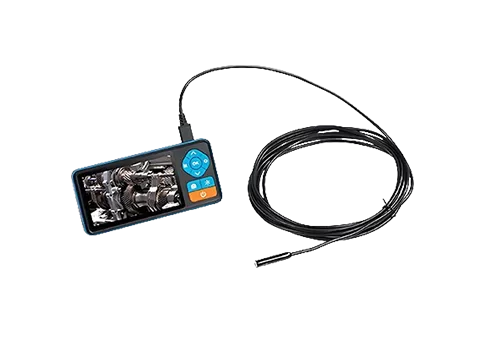
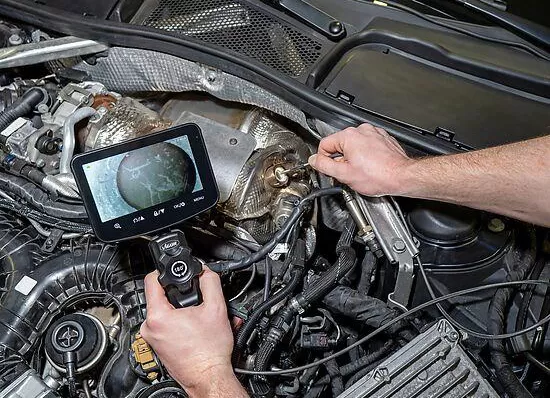
To fully grasp the value of this technology, we must first define its core function. Engine internal inspection refers to the non-destructive examination of internal engine components—such as cylinders, pistons, and valves—without the need for mechanical disassembly. By utilizing specialized optical instruments like industrial borescopes, technicians can navigate through tiny access ports to capture high-definition visual data of the engine's most inaccessible areas.
The scope of this technology is vast, covering multiple heavy-duty and precision sectors:
Automotive Engines: Diagnosing misfires, compression loss, and oil consumption in passenger and commercial vehicles.
Diesel Generators: Ensuring the reliability of backup power systems in hospitals and data centers.
Industrial Compressors: Monitoring the internal health of continuous-operation pneumatic systems.
Marine Engines: Conducting vital at-sea inspections where engine failure is not an option.
Heavy Construction Equipment: Keeping excavators and loaders operational in harsh, dust-filled environments.
Why is this process so critical?
The primary driver is cost prevention. Avoiding costly engine teardowns saves thousands of dollars in labor alone. Furthermore, regular engine borescope inspections allow maintenance teams to detect early-stage damage before it results in a catastrophic failure. By pinpointing exactly which cylinder or valve is failing, facilities can drastically improve maintenance efficiency, order the correct replacement parts in advance, and significantly reduce downtime in industrial operations.
Comparison: Traditional Teardown vs. Borescope Inspection
| Engine Teardown | Extremely High | Days to Weeks | High | Severe |
| MAIYIS Borescope Inspection | Low | Minutes | Flawless (Visual) | Minimal to None |
How to Choose the Right Engine Inspection Equipment
Procuring the correct internal engine diagnostic tool requires understanding the specific geometric constraints of the engines you service. Consider these critical factors before making a decision:
Probe Diameter Compatibility: This is paramount. The probe must be thin enough to pass through a diesel injector port (often under 6mm) but sturdy enough not to buckle.
Insertion Length: Automotive engines require short probes (1-2 meters), while marine or industrial generator engines may require 5 meters or more.
Image Resolution (HD/4K): To spot hairline cracks on a highly reflective, oil-coated piston, ultra-high resolution is absolutely necessary.
Oil & Heat Resistance: The camera lens and insertion tube must be chemically resistant to synthetic oils, coolant, and residual combustion heat.
Flexibility & Articulation: An articulating tip (capable of bending 180 degrees) is required to look backward at the intake and exhaust valves.
Data Recording Capability: Ensure the device can easily capture and export video files for maintenance logs and client reports.
Why Choose MAIYIS for Engine Internal Inspection Solutions
When an incorrect diagnosis can result in a $50,000 engine failure, professionals do not compromise on their tools. MAIYIS is trusted by global industries because we engineer our solutions based on uncompromising reliability and technological superiority.
Quality You Can Trust
Our borescopes are built upon rock-solid engineering standards and precision manufacturing. We understand that these tools will be dropped, covered in oil, and pushed into harsh environments. MAIYIS equipment is designed to deliver stable, repeatable performance day in and day out.
Innovation-Driven Technology
We are obsessed with advanced industrial imaging systems. Through continuous R&D investment, MAIYIS consistently brings future-ready inspection solutions to the market, integrating features like ultra-bright fiber-optic illumination and highly responsive joystick articulation.
Integrity and Global Partnerships
We operate on a foundation of transparent cooperation. MAIYIS is dedicated to building long-term B2B relationships with repair franchises, industrial plants, and distributors. Our robust global supply capability ensures that wherever your facility is located, you have access to top-tier diagnostic tools.
Quality Control Excellence
To guarantee perfection, MAIYIS builds a full lifecycle QC system:
R&D Inspection Control: Rigorous stress-testing of new probe materials and camera sensors.
Production Quality Assurance: Meticulous calibration on the assembly line.
Final Delivery Validation: Every unit is tested for articulation fluidity and image clarity before shipping.
Our ultimate goal: ensuring zero-defect industrial vision solutions.
Social Responsibility Commitment
We believe that leading companies must be responsible corporate citizens. MAIYIS is committed to environmental protection, continuous employee development, active community contribution, and strictly ethical manufacturing practices.
MAIYIS Engine Inspection and Industrial Vision Solutions
Visualizing the internal health of an engine is the most powerful diagnostic capability a mechanic or facility manager can possess. MAIYIS provides the clarity and durability required to keep the world's engines running smoothly.
Explore MAIYIS Product Categories:
Industrial Borescope: Heavy-duty, articulating systems for complex engine diagnostics.
Endoscope Camera Module: Customizable imaging cores for OEM integration.
Endoscope Application Solutions: Enterprise-grade diagnostic workflows.
Veterinary Endoscopes: Showcasing our deep, cross-industry imaging expertise.
Pipe Endoscope: Designed for internal pipeline inspection, enabling non-destructive examination of industrial piping systems, fluid lines, and hidden infrastructure within mechanical plants.
Frequently Asked Questions (FAQ)
Q: Can a borescope look backward to inspect the engine valves?
A: Yes. MAIYIS industrial borescopes feature advanced articulating probes. By using a control joystick on the handle, the technician can bend the camera tip up to 180 degrees once it is inside the combustion chamber, allowing for a crystal-clear view of the intake and exhaust valves.
Q: Is it safe to insert a borescope into an engine that still has oil in it?
A: Absolutely. Our industrial-grade probes are engineered with oil-resistant and waterproof (IP67/IP68) materials. They are designed to withstand exposure to engine oil, unburnt fuel, and coolant without degrading the camera lens or the protective cable casing.
Q: Do I need to wait for the engine to completely cool down before inspection?
A: While extreme operating temperatures can damage delicate electronics, MAIYIS borescopes are built with high heat resistance. However, it is generally recommended to let the engine cool to a safe handling temperature (usually under 60°C / 140°F) to ensure the longevity of the equipment and the safety of the technician.
Q: How do I access a diesel engine that does not have spark plugs?
A: For diesel engines, the most common access points for an internal engine inspection are the glow plug ports or the fuel injector ports. MAIYIS offers ultra-thin probe options (such as 4mm or 5.5mm diameters) specifically designed to slide effortlessly through these narrow diesel access points.