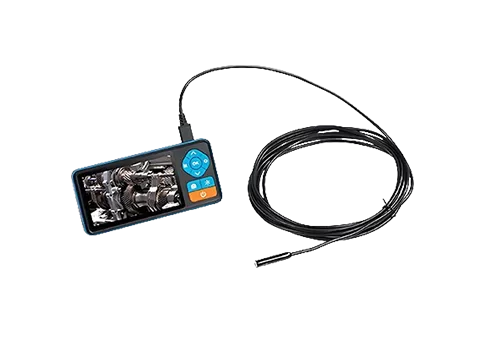
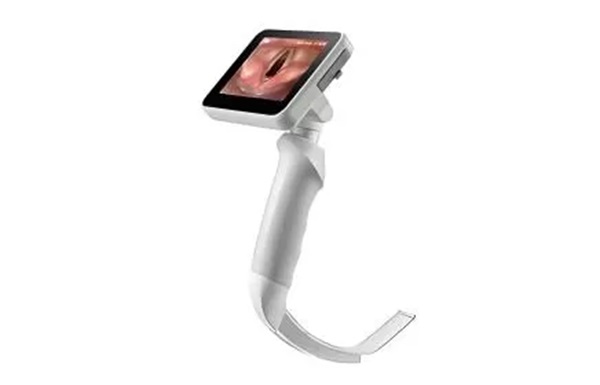
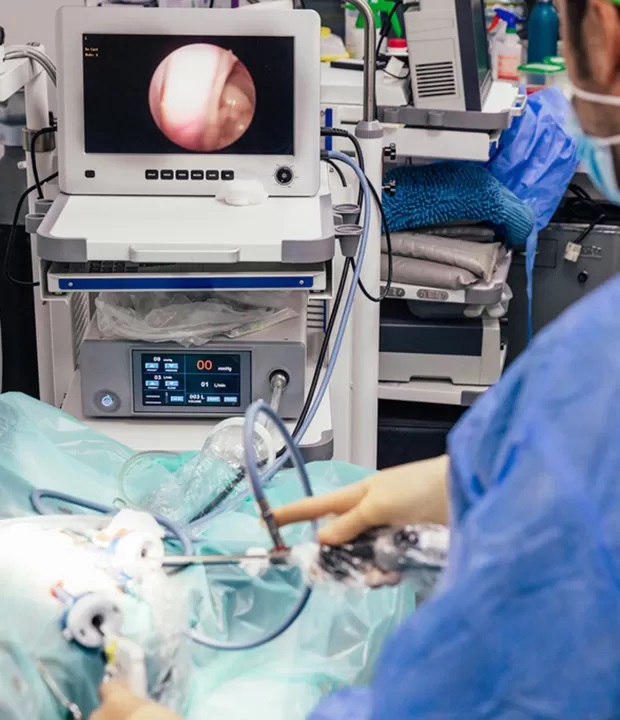
Hidden engine faults can be incredibly difficult to diagnose without the proper equipment. A professional borescope inspection camera (also called an automotive endoscope or industrial borescope) allows mechanics to visually explore the internal components of engines, cylinders, intake systems, and transmissions — all without major disassembly.
At MAIYIS, we provide durable, high-performance industrial borescopes built for real-world automotive workshops. This practical guide covers why and when to use a borescope inspection camera and delivers a clear, step-by-step process to help you get the most out of the tool.
Why Choose a Borescope Inspection Camera Over Conventional Diagnostic Tools
Modern engines are highly complex, and OBD scanners or basic testers frequently only reveal symptoms rather than the actual root causes. A professional automotive borescope delivers direct, high-resolution visuals from inside tight spaces, enabling faster and more accurate decisions.
Key benefits include:
Excellent Reach Without Teardown: Thin, flexible probes easily access spark plug holes, fuel injector ports, and other confined areas that would otherwise require time-consuming disassembly.
Non-Destructive Operation: Significantly reduces labor time, minimizes the risk of accidental damage, and prevents contamination during reassembly.
Superior Image Quality: HD cameras with powerful adjustable LED lighting expose fine details such as cylinder wall scoring, carbon deposits, valve conditions, and injector spray patterns.
Improved Efficiency: Perform comprehensive internal checks in minutes instead of hours, helping workshops boost productivity and customer turnaround.
Long-Term Cost Savings: Early detection of minor issues helps avoid major failures and extends engine lifespan.
Professional Documentation: Easily capture photos and videos for customer explanations, warranty support, and service records.
Broad Versatility: Ideal for engines, fuel systems, intake manifolds, transmissions, and even retrieving small dropped components.
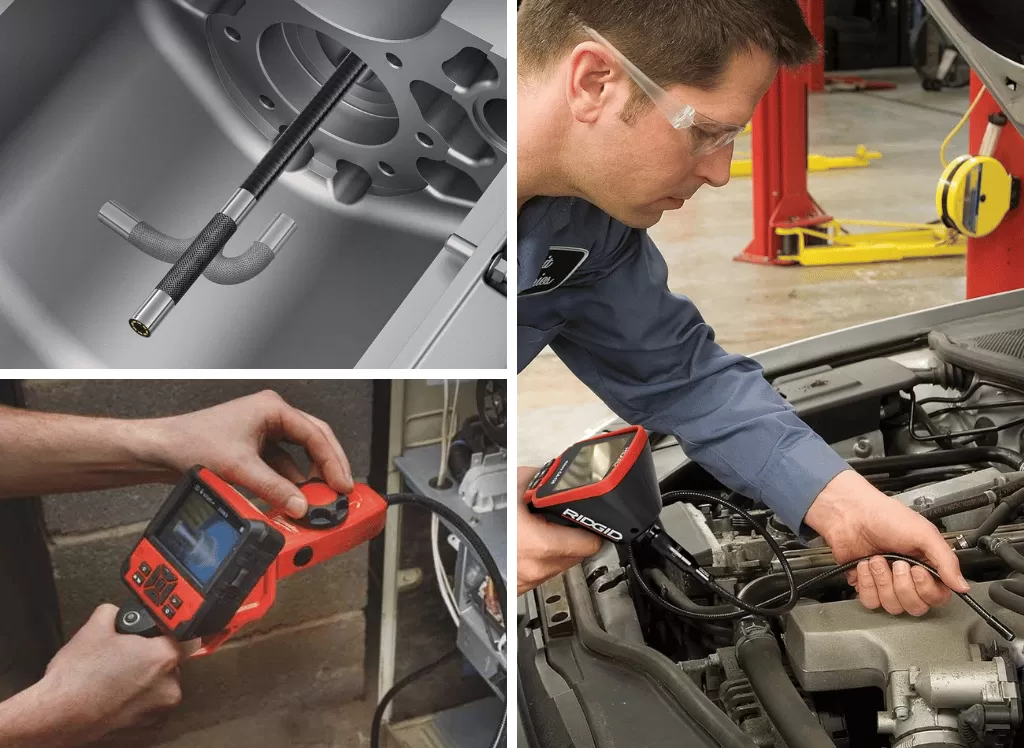
When Should You Use a Borescope Inspection Camera?
Use a borescope inspection camera whenever you need precise internal visuals without major disassembly. Typical applications include:
Routine preventive maintenance checks to identify early wear or buildup
Diagnosing symptoms like misfires, rough idle, excessive oil consumption, or power loss
Pre-purchase inspections or final quality checks before vehicle delivery
Post-repair verification to confirm that work has been completed correctly
Inspecting combustion chambers, intake valves, fuel injectors, or gearbox internals for hidden damage or blockages
Today, professional technicians in 4S stores and independent workshops consider a quality borescope an essential part of their diagnostic toolkit.
Step-by-Step Guide: How to Use a Borescope Inspection Camera for Vehicle Inspection
Follow these steps to ensure safe, accurate, and professional results every time.
Safety First! Park the vehicle on a level surface, turn off the engine, and allow it to cool completely. Open the hood or relevant access panel and clean the area to prevent dirt or debris from entering the engine.
Step 1: Prepare Your Borescope
Select the right borescope model for the job. The IME-P2C Portable Borescope Camera is excellent for quick, convenient inspections thanks to its smartphone connectivity and compact design. For deeper or more complex areas, consider the IME-P5I or IME-H5I with extended flexible probes. Fully charge the device, connect it if needed, and attach any necessary accessories.
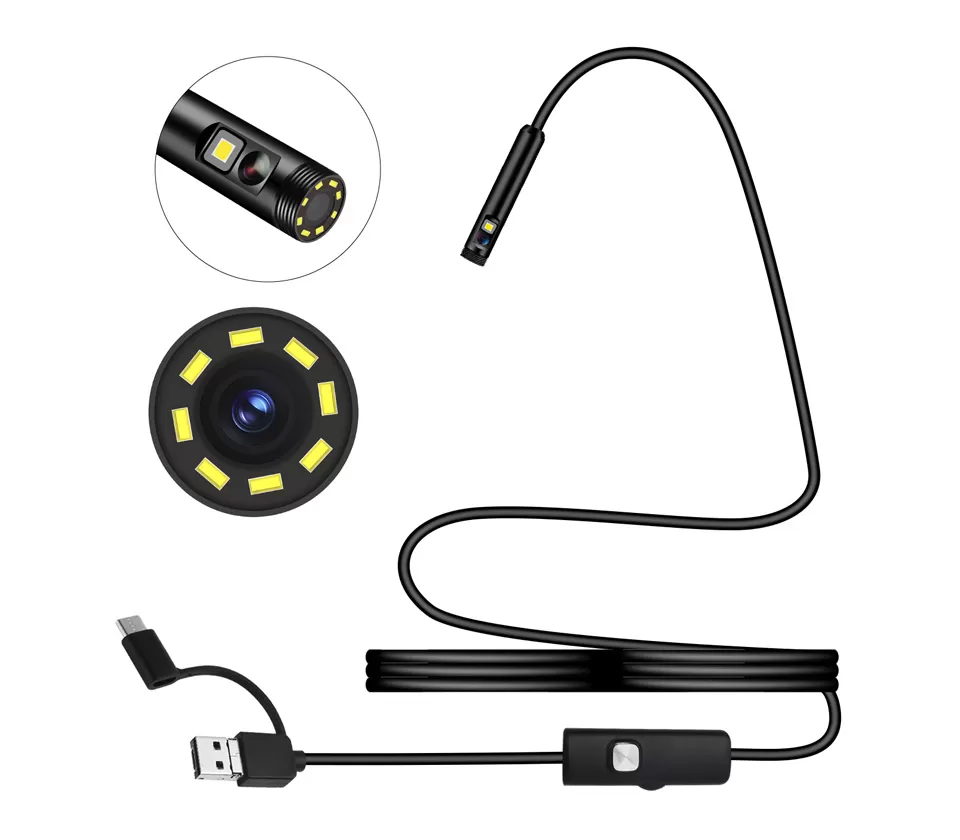
Step 2: Gently Insert the Probe
Choose a suitable entry point, such as a spark plug hole for cylinder inspection or an injector port for fuel system checks. Carefully insert the slim, flexible probe while watching the live video feed on the screen or connected smartphone. Avoid forcing the probe — rely on its flexibility and bright LED lighting to navigate smoothly through tight spaces. Adjust lighting and focus for the clearest possible view in dark, oily conditions.
Step 3: Perform the Inspection
Slowly maneuver and rotate the probe to examine all relevant surfaces. Look for common issues such as:
Heavy carbon buildup on pistons and valves
Scoring, glazing, or damage on cylinder walls
Burned, recessed, or leaking valves
Clogged or poorly atomizing fuel injectors
Debris or abnormal wear in intake systems
Use zoom and recording functions to capture clear evidence when problems are spotted.
Step 4: Document Your Findings
Take high-quality photos and videos from multiple angles. These visuals provide strong supporting evidence for customer discussions, repair recommendations, and workshop records. Record the location and severity of each issue you discover.
Step 5: Carefully Withdraw the Probe
Slowly and smoothly retract the probe to avoid snagging on internal parts or damaging the cable. Once removed, clean the lens and probe thoroughly with a soft, non-abrasive cloth to remove any oil or carbon residue.
Step 6: Review and Plan Next Steps
Analyze the captured images and videos, ideally on a larger screen. Assess component condition and decide whether cleaning, minor repairs, or further work is necessary.
Why Workshops Trust MAIYIS Industrial Borescopes
MAIYIS borescopes are designed for daily professional use in automotive workshops. The IME-P2C Portable Borescope Camera offers outstanding HD clarity and easy smartphone integration, making it ideal for fast engine diagnostics. The IME-P5I Pipe Inspection Borescope and IME-H5I Handheld Pipeline Borescope provide excellent flexibility and strong illumination for deeper or more challenging inspections.
With rugged construction, user-friendly operation, and reliable performance, MAIYIS tools help technicians diagnose faster, reduce unnecessary disassembly, and deliver higher-quality service.