Exhaust systems serve as critical components in managing emissions, controlling engine backpressure, and maintaining overall powertrain efficiency across automotive vehicles, heavy-duty diesel machinery, marine engines, and stationary power generation equipment. These systems endure some of the harshest operating environments imaginable — extreme temperatures exceeding 800°C, highly corrosive exhaust gases, abrasive particulates, and repeated thermal cycling that accelerate material degradation.
Common issues such as carbon and soot accumulation, catalytic converter blockage, pipe corrosion, and Diesel Particulate Filter (DPF) clogging can quickly lead to increased emissions, reduced fuel efficiency, higher backpressure, and potential regulatory violations. Traditional inspection methods often require partial or complete disassembly of exhaust components, resulting in lengthy downtime, high labor costs, and risks of damaging fragile parts during reassembly.
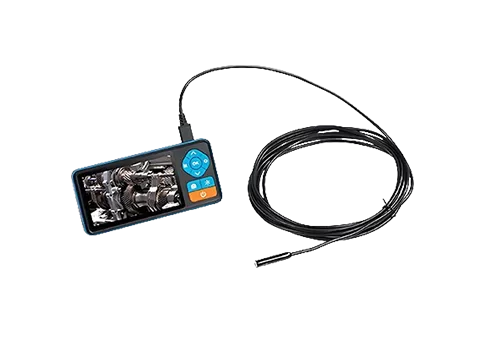
Modern industrial borescopes and Remote Visual Inspection (RVI) technologies have transformed exhaust system inspection. These advanced tools enable technicians to perform thorough, non-destructive internal diagnostics through small access points, delivering real-time high-definition insights that support faster decision-making, better emission compliance, and more effective predictive maintenance programs.
What Is Exhaust System Inspection?
Definition of Exhaust System Inspection
Exhaust system inspection is the systematic evaluation of internal exhaust pathways and emission control components using specialized diagnostic equipment such as industrial borescopes. This non-invasive approach provides detailed visual access to areas that are otherwise difficult or impossible to examine without major disassembly.
Key inspection areas typically include exhaust pipes and manifolds, catalytic converters, Diesel Particulate Filters (DPF), mufflers and silencers, exhaust gas recirculation (EGR) systems, and various emission control chambers. Exhaust inspection camera systems allow inspectors to identify surface conditions, blockages, corrosion patterns, and material fatigue with exceptional clarity.
Why Exhaust System Inspection Is Important
Regular exhaust system inspection delivers multiple operational and regulatory advantages. It ensures compliance with increasingly stringent emission standards, helps maintain optimal engine performance by reducing backpressure, lowers overall fuel consumption, and prevents unexpected system failures that could lead to costly roadside breakdowns or operational shutdowns. Furthermore, proactive inspection extends the service life of expensive components like catalytic converters and DPF units while enhancing workplace safety by identifying potential exhaust leaks early.
| Inspection Objective | Operational Benefit |
|---|
| Carbon buildup detection | Improve exhaust flow efficiency |
| Catalytic converter blockage | Reduce emission failure risk |
| Corrosion monitoring | Prevent structural damage |
| DPF clogging detection | Maintain engine performance |
| Leak detection | Improve safety and compliance |
Common Problems Found During Exhaust System Inspection
Exhaust system inspection using industrial borescopes consistently uncovers hidden defects that external visual checks or performance data alone cannot reveal.
Carbon and Soot Buildup
Heavy carbon deposits and soot accumulation are among the most frequent findings, particularly in diesel applications. These layers reduce airflow, increase backpressure, force the engine to work harder, and ultimately decrease fuel efficiency while elevating emission levels.
Catalytic Converter Blockage
Internal honeycomb structures in catalytic converters can become partially or fully obstructed by melted substrates, oil ash, or excessive particulates. This leads to emission test failures, overheating, and significant loss of conversion efficiency.
Corrosion and Metal Fatigue
Constant exposure to acidic condensates and high temperatures causes rust, pitting, and wall thinning in exhaust pipes and mufflers. Over time, this weakens structural integrity and raises the risk of dangerous exhaust gas leaks.
Diesel Particulate Filter (DPF) Clogging
DPF units trap soot effectively but can become overloaded if regeneration cycles fail. Borescope inspection reveals ash loading, cracking, or melting inside the filter substrate that impacts engine performance and increases fuel consumption.
Exhaust Gas Leakage
Small cracks, failed welds, or gasket degradation allow toxic exhaust gases to escape before the tailpipe. These leaks create safety hazards for operators, increase noise levels, and trigger emission control system warnings.
Challenges of Traditional Exhaust System Inspection Methods
Conventional inspection approaches face significant practical limitations in today’s fast-paced maintenance environments.
System Disassembly Requirement
Removing exhaust components for visual inspection is labor-intensive, time-consuming, and often requires specialized lifting equipment. The process generates extended equipment downtime and risks damaging seals or fragile substrates during reassembly.
High-Temperature Inspection Risks
Many exhaust components remain dangerously hot long after shutdown, creating serious burn hazards and forcing technicians to wait for complete cooling before safe access.
Limited Internal Visibility
Narrow pipe diameters, complex bends, and internal baffles make it extremely difficult to assess true internal conditions using traditional mirrors or endoscopes with poor lighting.
Lack of Digital Documentation
Manual inspections rarely produce consistent, verifiable visual records, leading to gaps in maintenance history, compliance challenges, and difficulty tracking defect progression over multiple service intervals.
How Industrial Borescopes Improve Exhaust System Inspection
Industrial borescopes have become essential tools for efficient exhaust pipe inspection and full system diagnostics.
Non-Destructive Internal Exhaust Inspection (RVI)
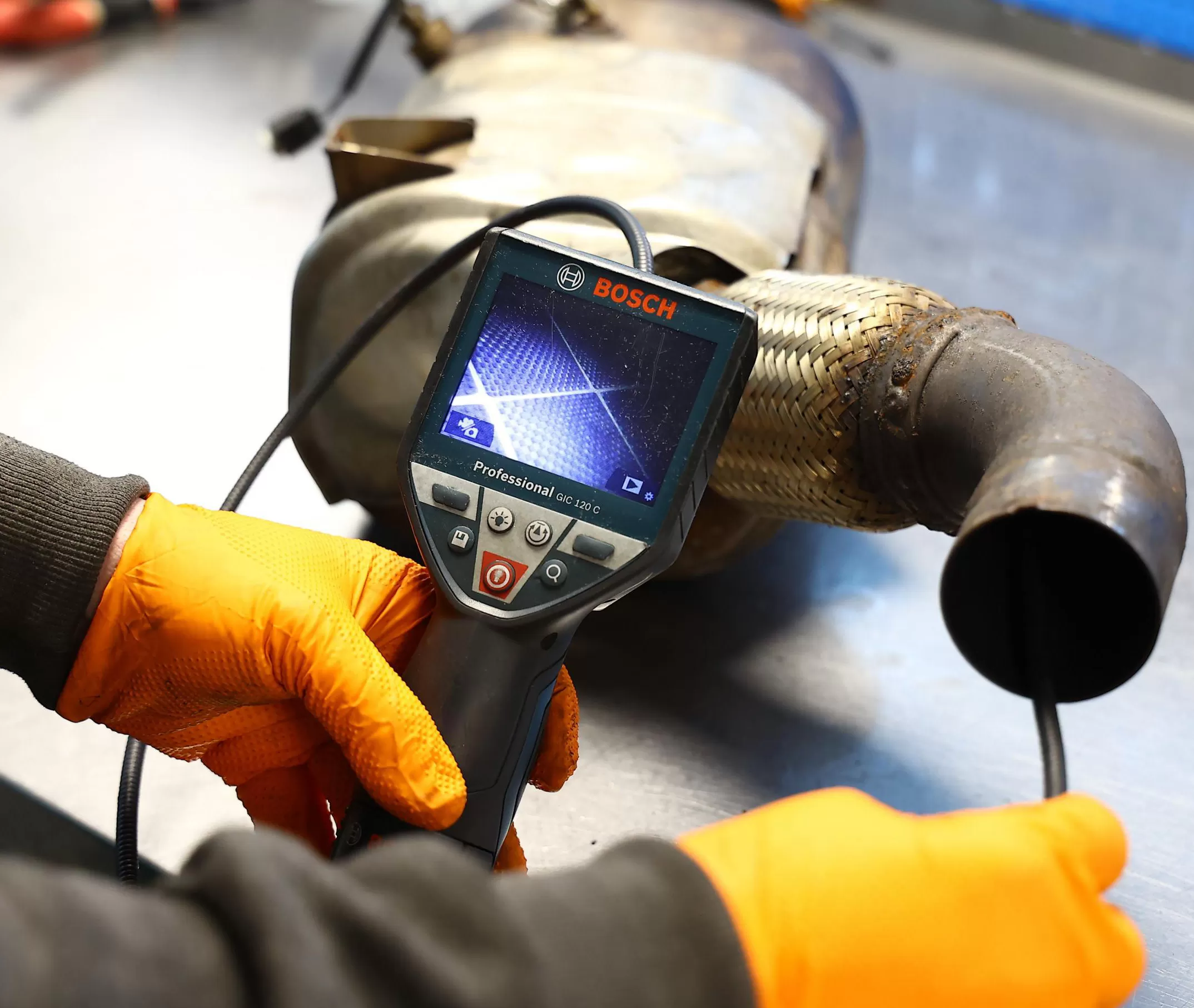
Industrial borescope exhaust system inspection allows access through existing sensor ports, exhaust outlets, or minimal openings. This eliminates unnecessary disassembly, delivering reduced downtime, lower maintenance costs, improved inspection speed, and a significantly safer working environment for technicians.
High-Definition Imaging in Low-Light High-Heat Environments
Contemporary systems feature HD/4K resolution sensors, powerful adjustable LED illumination, heat-resistant probe construction, and full video recording capabilities. These features ensure clear visualization even inside dark, reflective, or soot-covered exhaust passages.
| Detectable Issue | Inspection Capability |
|---|
| Carbon buildup | Flow restriction analysis |
| Corrosion | Structural integrity check |
| Blockage | Visual obstruction detection |
| Cracks | Early failure identification |
| Leakage | Safety risk detection |
Flexible Probe Navigation in Exhaust Systems
Small-diameter, long-reach probes with articulated tips and high-temperature-resistant materials can navigate complex pipe geometries, bends, and restricted spaces with precision.
Digital Documentation and Predictive Maintenance
Captured images and videos support detailed reporting, trend analysis, AI-assisted defect recognition, and predictive failure modeling that help maintenance teams move from reactive repairs to proactive optimization.
In modern maintenance and diagnostics workflows, endoscope inspection has become a fundamental method for evaluating internal conditions of exhaust systems and other confined mechanical structures. By combining advanced optical imaging with flexible probe technology, endoscope inspection enables technicians to perform accurate, non-destructive evaluation of internal components such as exhaust pipes, catalytic converters, and DPF systems. This approach significantly improves defect detection accuracy while reducing the need for disassembly, downtime, and labor-intensive maintenance procedures. As industries continue to move toward predictive maintenance strategies, endoscope inspection is becoming an essential standard for ensuring operational efficiency, safety compliance, and emission control reliability across automotive, marine, and industrial applications.
Key Features to Look for in an Exhaust System Inspection Camera
Choosing the right exhaust inspection camera or best borescope for exhaust system inspection is crucial for reliable performance in extreme conditions.
High-Temperature Resistance
Probes must withstand sustained high temperatures and corrosive gases without degradation of the sheath or optics.
High-Resolution Imaging
HD or 4K sensors paired with excellent low-light performance and strong illumination deliver sharp defect visibility.
Flexible and Long-Reach Probe
Extended working lengths and superior flexibility allow deep access into long exhaust runs and complex manifolds.
Compact and Articulating Design
Advanced articulation and compact diameters enable multi-angle viewing in tight spaces.
Data Recording and Connectivity
Wireless transmission, cloud-based reporting, and comprehensive digital logging streamline documentation and team collaboration.
Comparison Table:
| Feature | Consumer Camera | Industrial Borescope |
|---|
| Heat resistance | Low | High |
| Imaging quality | Standard | HD/4K |
| Flexibility | Limited | Advanced articulation |
| Durability | Weak | Industrial-grade |
| Reporting | Basic | Professional |
Applications of Exhaust System Inspection Across Industries
Exhaust system inspection plays a vital role in multiple high-demand sectors.
Automotive Industry
Routine automotive exhaust inspection and catalytic converter diagnostics ensure emission compliance and optimal vehicle performance.
Diesel Engines
Heavy-duty trucks, construction equipment, and generators benefit from regular DPF inspection and soot monitoring.
Marine Engines
Saltwater environments accelerate corrosion, making thorough exhaust inspection essential for vessel safety and regulatory compliance.
Power Generation Systems
Turbine and generator exhaust systems require consistent monitoring to maintain continuous reliable operation.
Industrial Manufacturing
Factory emission control systems and process equipment rely on regular inspection for quality control and environmental compliance.
Step-by-Step Exhaust System Inspection Workflow
Step 1 — Inspection PlanningIdentify the specific exhaust configuration, review maintenance history, and select optimal access points while assessing safety requirements.
Step 2 — Equipment PreparationCalibrate the industrial borescope, select appropriate heat-resistant probe, adjust lighting, and prepare recording settings.
Step 3 — Internal InspectionPerform systematic scanning for soot accumulation, corrosion, blockages, and structural defects while documenting findings in real time.
Step 4 — DocumentationCapture high-quality images and video, classify defects according to severity, and compile professional inspection reports.
Step 5 — Maintenance DecisionPrioritize cleaning, repair, or replacement actions and establish preventive maintenance schedules based on inspection data.
Future Trends in Exhaust System Inspection Technology
AI-Based Emission Defect Detection
Automated analysis of soot levels, blockage prediction, and emission performance optimization is becoming increasingly sophisticated.
Robotic Exhaust Inspection Systems
Autonomous borescope robots and remote-controlled crawlers are expanding capabilities for large-scale or hazardous exhaust networks.
Cloud-Based Maintenance Platforms
Fleet-wide emission tracking and centralized inspection data management enable faster remote expert support.
Miniature Endoscope Camera Modules
OEM endoscope camera modules allow for embedded or semi-permanent diagnostic integration in next-generation exhaust designs.
Why Industrial Buyers Choose MAIYIS for Exhaust System Inspection Solutions
Professional Industrial Borescope Manufacturer
MAIYIS specializes in industrial borescopes and advanced visual inspection technologies for exhaust systems, emission diagnostics, automotive maintenance, marine engineering, and industrial power systems.
MAIYIS Product Categories
Industrial Borescope: High-temperature inspection capability, flexible probe systems, and HD imaging optimized for exhaust diagnostics.
Veterinary Endoscopes: Precision optical systems adaptable for specialized applications.
Endoscope Camera Module: OEM integration solutions and compact industrial vision systems.
Endoscope Application Solutions: Customized inspection systems and industry-specific solutions.
MAIYIS Commitment to Quality and Innovation
MAIYIS stands for Quality through strict lifecycle QC ensuring stable performance, Innovation via continuous advancement in industrial vision systems, Integrity with transparent long-term partnerships, a Quality Control zero-defect engineering system, and Social Responsibility through sustainable industrial development.
Why Global Customers Work With MAIYIS
| MAIYIS Advantage | Customer Value |
|---|
| Industrial manufacturing | Long-term reliability |
| OEM/ODM capability | Custom solutions |
| Advanced imaging | Accurate diagnostics |
| Strict QC system | Stable performance |
| Technical support | Fast deployment |
Explore MAIYIS Exhaust System Inspection Solutions
Looking for a reliable industrial borescope for exhaust system inspection? MAIYIS provides professional-grade solutions for catalytic converters, exhaust pipes, DPF units, and complete emission systems.
Explore our Industrial Borescope, Endoscope Camera Modules, and customized inspection systems to enhance emission compliance, improve reliability, and reduce costly maintenance downtime.
Contact MAIYIS today for OEM/ODM cooperation, detailed technical consultation, or tailored exhaust system inspection solutions.