In the highly competitive landscape of modern manufacturing, industrial machinery is the beating heart of production. From towering stamping presses and high-speed automated assembly lines to heavy-duty mining equipment and precision CNC machining centers, these massive assets represent millions of dollars in capital investment. They are designed to operate relentlessly, but this continuous operation comes with a heavy toll: relentless mechanical stress, friction, and heat.
Historically, industrial maintenance has been caught between two costly extremes. On one hand, running machinery until it breaks ("run-to-failure") results in catastrophic damage, safety hazards, and agonizingly long production halts. On the other hand, traditional preventive maintenance often requires scheduled, full-scale equipment teardowns—dismantling complex systems blindly just to inspect them, which consumes massive amounts of labor and causes unnecessary operational downtime.
Today, the paradigm has shifted toward proactive, data-driven diagnostics. By integrating industrial borescope technology into daily industrial machinery maintenance routines, plant managers and reliability engineers can now look deep inside the "black box" of their equipment without removing a single bolt. This comprehensive guide explores the critical importance of internal machinery inspections, the destructive hidden faults they uncover, and how MAIYIS industrial vision solutions empower modern industries to maximize equipment lifespan and eliminate unexpected downtime.
Why Industrial Machinery Maintenance Is Critical for Modern Manufacturing
Industrial machinery forms the core infrastructure of the global supply chain. When we talk about these assets, we are referring to critical systems such as advanced CNC machines, continuous production lines, heavy industrial equipment, automation machinery, and massive energy systems.
The requirement for rigorous equipment maintenance inspection is not merely a technical recommendation; it is an economic imperative. Why is maintenance so critical?
First and foremost, unexpected breakdown causes devastating production loss. In a tightly synchronized manufacturing plant, the failure of a single gearbox on a main conveyor belt can halt the entire factory floor. Every minute of downtime translates directly to thousands of dollars in lost revenue and missed delivery deadlines.
Secondly, the most dangerous threats to a machine are invisible from the outside. Hidden internal wear—such as degrading bearings, micro-cracks in drive shafts, or failing gear teeth—develops silently deep within cast-iron housings. Without visual inspection, these minor issues evolve intocatastrophic mechanical failures. Equipment lifespan depends entirely on preventive maintenance. By adopting non-destructive testing (NDT) with a machinery diagnostic camera, maintenance teams can identify and resolve these hidden faults early, ensuring that production remains uninterrupted and financial losses are mitigated.
Common Problems in Industrial Machinery Without Proper Maintenance
When machinery is left to run without regular internal inspections, the laws of physics take over. The environment inside a high-speed machine is brutal. When technicians guide an industrial borescope into these systems, they are often hunting for these specific, highly destructive problems:
Mechanical Wear and Tear
Wherever metal meets metal, friction exists. Even with perfect lubrication, long-term operation causes gear abrasion, shaft damage, and friction degradation. Over time, the hardened surfaces of gears become pitted and scored. This irregular surface alters the mechanical tolerances of the machine, leading to excessive vibration, deafening noise, and a severe drop in power transmission efficiency.
Lubrication System Failure
Oil and grease are the lifeblood of any industrial machine. However, lubrication systems frequently fail due to oil contamination, where microscopic metal shavings shear off the gears and circulate through the fluid. In other cases, blocked oil galleries lead to insufficient lubrication. When moving parts are starved of oil, the friction generates immense heat, creating a severe overheating risk that can literally weld internal components together.
Internal Component Damage
Constant vibration and heavy load cycles induce structural fatigue. Deep inside the machinery, this stress manifests as hairline cracks in hidden parts, such as engine blocks or transmission casings. Additionally, bearing failure is a constant threat. When the ball bearings or rollers inside a housing begin to deform, the entire rotational axis of the machine is compromised, leading to immediate shutdown.
Dust and Debris Accumulation
Factories, mines, and processing plants are inherently dirty environments. Industrial contamination—such as abrasive airborne dust, metal swarf, or chemical residues—can bypass external seals. Once inside, this debris mixes with lubricants to form a thick, grinding sludge. This accumulation leads to the fatal blockage of mechanical systems, suffocating cooling vents and jamming delicate actuator valves.
Quick Reference: Machinery Defect Matrix
| Gear Wear | Friction & Surface fatigue | Efficiency loss & High vibration | High |
| Oil Contamination | Dirt ingress & Metal shavings | Accelerated system failure | Critical |
| Bearing Damage | Overheating & Overloading | Shaft misalignment & Downtime | High |
| Debris Accumulation | Environmental contamination | Blocked cooling & Jammed parts | Medium to High |
How Industrial Machinery Maintenance Works with Borescope Technology
Executing an internal equipment inspection using a borescope is a surgical, highly efficient procedure. It transforms days of manual labor into minutes of visual verification. Here is the step-by-step workflow utilized by modern maintenance professionals:
Step 1: Identify Inspection Access Points
The beauty of a borescope is that it requires almost zero disassembly. The technician locates existing non-invasive access points, such as oil maintenance ports, breather vents, machined machine openings, or pre-drilled service holes.
Step 2: Insert Industrial Borescope Probe
The technician carefully feeds the ultra-thin, flexible insertion probe into the machinery. Using advanced articulation (steering) controls on the handle, they navigate through complex internal geometries, bypassing spinning shafts and thick baffles to reach deep internal structures that are otherwise impossible to see.
Step 3: Real-Time Visual Inspection
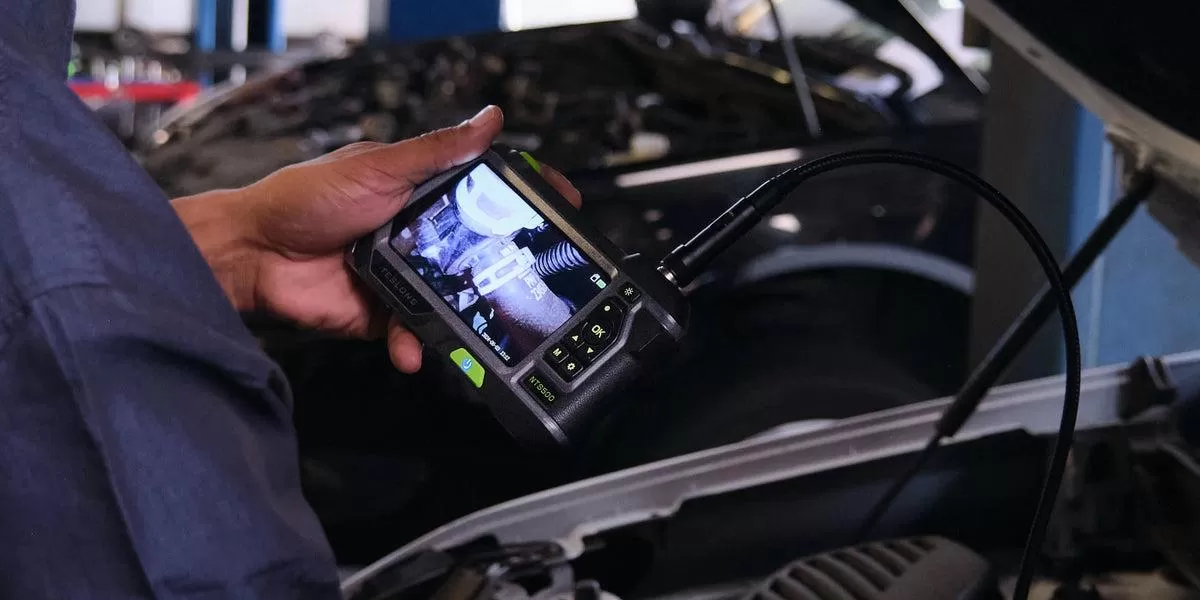
The dark cavity of the machine is instantly illuminated by the probe's powerful LED illumination system. The HD imaging system captures the internal surfaces, transmitting a crystal-clear, zero-latency feed directly to the live video monitoring display held by the technician.
Step 4: Detect Faults and Abnormal Conditions
Acting as a forensic mechanic, the technician evaluates the internal health. They analyze wear patterns on gear teeth, scan for internal cracks along high-stress weld seams, and assess contamination levels in the residual oil pooling at the bottom of the casing.
Step 5: Record Data for Maintenance Strategy
Professional maintenance relies on data. The borescope allows for high-definition video documentation and image capture. This evidence is crucial for predictive maintenance planning, allowing managers to track a slowly degrading bearing over months and order replacement parts long before providing repair decision support.
Applications of Industrial Machinery Maintenance
Because rotational force and complex mechanics are universal, the need for robust industrial machinery maintenance spans across every major heavy-duty sector.
Manufacturing Production Lines
In automotive plants and consumer goods factories, automated assembly systems and continuous production equipment must operate in perfect synchronization. Borescopes are used to inspect robotic joints, conveyor drive motors, and pneumatic cylinders during brief shift-change windows, ensuring the line never stops unexpectedly.
Heavy Industrial Equipment
The mining and construction industries push machinery to its absolute limits. Mechanics use rugged industrial borescopes to inspect the massive hydraulic pumps, rock crusher gearboxes, and diesel engines of mining machinery and construction equipment directly on the dirt lot, preventing catastrophic field failures.
Energy & Power Systems
In the power generation sector, reliability is a matter of national security. Borescopes are the primary tool used to inspect the internal blades of steam and gas turbines, massive hydroelectric generators, and industrial power systems. Catching a micro-crack on a turbine blade prevents a multi-million-dollar disaster.
CNC & Precision Machinery
In aerospace and medical manufacturing, tolerances are measured in microns. Technicians use ultra-thin borescopes to inspect the high-speed spindles and ball screws inside machining centers and precision cutting equipment. Even the smallest amount of metal swarf hidden inside a CNC tool changer can ruin an expensive titanium workpiece.
Recommended MAIYIS Solutions for Industrial Machinery Maintenance
Standard commercial cameras cannot survive the oily, hot, and abrasive environment inside heavy machinery. MAIYIS has engineered a robust product matrix of industrial-grade visual diagnostic tools designed specifically for reliability engineers.
Industrial Borescope for Deep Machinery Inspection
Best For: Complex mechanical systems, turbines, and heavy-duty industrial equipment.
Key Features: This flagship system is built for the harshest environments. It features high-resolution imaging capable of spotting hairline fatigue cracks. Its flexible probe structure boasts 360-degree articulation for precise navigation, all encased in a durable industrial design that is strictly oil and waterproof (IP67/IP68).
Handheld Inspection System for Field Technicians
Best For: Factory maintenance teams, mobile mechanics, and on-site repair operations.
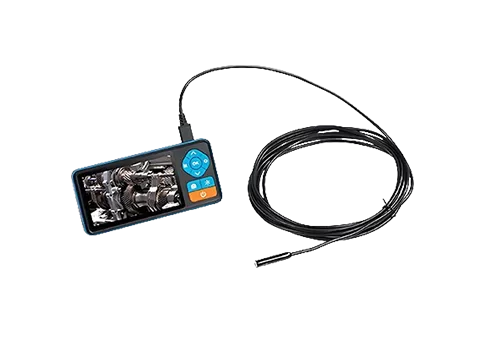
Key Features: Designed for agility on the factory floor, this portable endoscope system provides technicians with a lightweight yet powerful inspection solution for rapid industrial diagnostics. It is an all-in-one portable device with an integrated HD display screen. It requires zero setup time, allowing for incredibly fast deployment. A technician can pull it from their belt and diagnose a jammed gear in less than three minutes.
Endoscope Camera Module for OEM Integration
Best For: Smart factory systems, custom machinery builders, and automated inspection platforms.
Key Features: For manufacturers building "Industry 4.0" capable machines, MAIYIS provides an embedded vision system. This machine integration ready module allows engineers to permanently install high-definition micro-cameras inside gearboxes or CNC housings, providing a customizable solution for continuous, 24/7 condition monitoring.
Benefits of Using Borescope for Industrial Machinery Maintenance
Transitioning a facility from reactive maintenance to proactive visual non-destructive testing (NDT) provides an overwhelming financial and operational advantage.
Key Benefits Include:
No Machine Disassembly Required: Keep the heavy casings bolted shut. Inspect internal components without wasting days taking the machine apart.
Faster Fault Diagnosis: Eliminate mechanical guesswork. Pinpoint the exact failing bearing or jammed valve in minutes.
Reduced Downtime: Machines are diagnosed rapidly and returned to production immediately if the components are deemed safe.
Lower Maintenance Cost: Stop replacing perfectly good parts. Only purchase replacements for the specific components you visually confirm are failing.
Improved Predictive Maintenance Capability: Record the internal wear of a gear over time, predicting exactly when it will fail so you can schedule the repair during a planned holiday shutdown.
Comparison: Traditional Teardown vs. Borescope Inspection
| Full Disassembly | Extremely High | Days to Weeks | High | Severe |
| MAIYIS Borescope Inspection | Low | Minutes | High (Visual Proof) | Minimal to None |
How to Choose the Right Industrial Maintenance Inspection Equipment
Procuring the correct machinery diagnostic camera is a critical engineering decision. The internal geometry of industrial equipment varies wildly. Evaluate these key selection factors to ensure you choose the right tool:
Probe Flexibility and Diameter: The probe must be thin enough to pass through tiny oil ports (often under 6mm) yet robust enough not to buckle when pushed.
Camera Resolution (HD/4K): To spot microscopic pitting on a highly reflective, oil-coated bearing, ultra-high resolution is non-negotiable.
Durability for Industrial Environments: The lens and cable must be chemically resistant to synthetic oils, coolants, and harsh industrial solvents.
Insertion Length: A CNC spindle may only need a 1-meter probe, while inspecting a large turbine may require 5 meters or more.
Lighting Performance: Deep machinery cavities are pitch black. Powerful, adjustable LED or fiber-optic lighting is required to eliminate shadows.
Data Recording Capability: Ensure the system can easily capture MP4 video and high-res images to attach to digital CMMS (Computerized Maintenance Management System) reports.
Why Choose MAIYIS for Industrial Machinery Maintenance Solutions
When an incorrect diagnosis can result in a catastrophic equipment failure and millions of dollars in lost production, global industries do not compromise on their tools. MAIYIS is trusted by maintenance professionals worldwide because of our relentless dedication to technological superiority and reliability.
Quality You Can Trust
Our borescopes are built upon uncompromising precision engineering standards. We know these tools will be dropped, covered in grease, and pushed to their limits. MAIYIS equipment is engineered to deliver stable industrial performance and rock-solid product reliability in the harshest factory environments.
Innovation-Driven Technology
We are pioneers in advanced machine vision systems. Through massive and continuous R&D development, MAIYIS consistently brings future-ready inspection solutions to the market, integrating innovations like 3D measurement mapping and ultra-responsive mechanical articulation.
Integrity and Global Partnerships
MAIYIS operates on a foundation of transparent cooperation. We are dedicated to building long-term B2B relationships with heavy equipment manufacturers, factory automation integrators, and industrial distributors. Our robust global supply capability ensures your facility always has the tools it needs.
Quality Control Excellence
To guarantee absolute perfection, MAIYIS builds a full lifecycle QC system:
R&D Inspection Control: Rigorous stress-testing of probes in boiling oil and extreme vibration chambers.
Production Quality Assurance: Meticulous optical calibration on the assembly line.
Final Delivery Validation: Every unit is tested for articulation fluidity and image clarity before shipping.
Our ultimate goal: ensuring zero-defect industrial vision solutions.
Social Responsibility Commitment
We believe that industry leaders must be responsible corporate citizens. MAIYIS is deeply committed to environmental sustainability, continuous employee development, active community contribution, and strictly ethical manufacturing practices.
MAIYIS Industrial Vision Solutions for Machinery Maintenance
Visualizing the internal health of complex machinery is the ultimate advantage for any plant manager or reliability engineer. MAIYIS provides the optical clarity, industrial durability, and mechanical precision required to keep the world's most critical equipment operating flawlessly.
Explore MAIYIS Product Categories:
Industrial Borescope: Heavy-duty, articulating systems for complex mechanical diagnostics.
Endoscope Camera Module: Customizable imaging cores for OEM integration and smart factory condition monitoring.
Endoscope Application Solutions: Enterprise-grade diagnostic workflows for heavy industry.
Veterinary Endoscopes: Showcasing our deep, cross-industry imaging technology expertise.
Why Global Customers Choose MAIYIS:
We deliver high-definition industrial imaging systems encased in a durable engineering design. Our extensive OEM/ODM customization capability ensures we can build the exact inspection tool your facility requires, fully supported by our professional B2B technical support team.
Looking for a reliable industrial machinery maintenance solution?
Stop wasting time and money blindly dismantling your critical equipment. MAIYIS provides advanced industrial borescope systems specifically designed for equipment diagnostics, preventive maintenance, and early failure detection.
[Request Technical Consultation]
[Get a Custom Product Recommendation]
[Contact MAIYIS Engineering Team]
Frequently Asked Questions (FAQ)
Q: Can the borescope camera be damaged by industrial lubricants or CNC coolants?
A: No. MAIYIS industrial borescopes are built specifically for manufacturing environments. The camera probes are protected by specialized, chemical-resistant polymers and feature IP67/IP68 waterproof ratings. They can be safely submerged in synthetic oils, hydraulic fluids, and harsh CNC cutting coolants without any degradation.
Q: Does the machine need to be completely cooled down before inspection?
A: While extreme operating temperatures can affect delicate electronics, MAIYIS probes are designed with high heat resistance. However, for the safety of the technician and the longevity of the equipment, we recommend allowing the machinery to cool to a safe handling temperature (typically under 60°C / 140°F) before conducting a prolonged internal inspection.
Q: How do I steer the camera inside a complex gearbox or turbine?
A: Our advanced industrial borescopes feature mechanical articulation. By using a highly responsive joystick or control dial on the handheld unit, the operator can bend the camera tip up to 360 degrees in multiple directions. This allows the camera to easily snake past spinning shafts, gears, and complex internal baffles.
Q: Can I integrate a MAIYIS camera permanently into my machine for continuous monitoring?
A: Absolutely. Alongside our handheld diagnostic tools, MAIYIS offers specialized Endoscope Camera Modules. These embedded vision solutions are designed specifically for OEMs and smart factories who want to integrate a permanent, fixed camera inside their machinery for 24/7 live visual condition monitoring.