In the complex landscape of modern manufacturing, industrial chemical pipelines function as the vital circulatory system of a facility. They transport everything from highly reactive acids and volatile petrochemicals to sterile pharmaceutical liquids. However, the very nature of these substances makes the pipelines highly susceptible to rapid degradation. Operating under extreme pressures and fluctuating temperatures, a minor structural weakness in these systems can quickly escalate into a catastrophic industrial disaster.
Ensuring the integrity of these hidden transport networks is not just a matter of operational efficiency; it is a critical requirement for environmental compliance and human safety. Traditional inspection methods—which often require shutting down the entire plant, draining the pipelines, and physically dismantling heavy flange joints—are no longer sustainable.
Today, industrial chemical pipeline inspection has evolved. Through advanced non-destructive testing (NDT) utilizing high-definition industrial borescopes, safety engineers can now peer deep into the darkest, most hazardous pipe networks in real-time. This comprehensive guide explores the risks hidden within chemical transport systems and demonstrates how MAIYIS industrial borescope solutions provide the ultimate visual diagnostic technology to keep your operations safe, compliant, and continuously running.
Why Industrial Chemical Pipeline Inspection Is Critical in Chemical Industries
The chemical manufacturing sector operates under some of the most stringent safety regulations in the world, and for good reason. Chemical pipelines are inherently high-risk systems. Unlike standard water lines, the fluids and gases transported through these industrial arteries are constantly interacting with the pipe walls at a molecular level.
Without proactive and rigorous chemical pipeline inspection, facilities expose themselves to catastrophic vulnerabilities. The critical risks include:
Corrosive Chemical Leakage: Highly acidic or alkaline substances can eat through standard steel or even specialized alloys over time, leading to sudden, toxic spills that contaminate the facility floor and surrounding soil.
Toxic Gas Escape: In volatile organic compound (VOC) transport, microscopic fissures can release invisible, odorless, and highly toxic gases, posing an immediate lethal threat to plant workers.
Pipeline Wall Thinning: Continuous friction from viscous fluids and chemical abrasion gradually shaves down the internal walls, compromising the pipe's ability to withstand pressure surges.
Internal Crystallization or Blockage: Certain chemicals change state due to temperature drops, forming solid crystals that restrict flow and cause dangerous pressure spikes upstream.
High-Pressure System Failure: When wall thinning meets a sudden pressure surge, the result is a violent pipe burst, leading to prolonged plant shutdowns and massive regulatory fines.
Maintaining industrial pipeline safety requires visual proof. Relying solely on external ultrasonic testing or pressure gauges only tells half the story. To truly verify the health of a pipe, you must see the internal surface.
Common Problems in Industrial Chemical Pipelines
Understanding what to look for during a corrosion inspection in pipelines requires a deep understanding of the chemical environment. Here are the most critical internal issues that an industrial borescope can reveal:
Internal Corrosion from Chemical Reactions
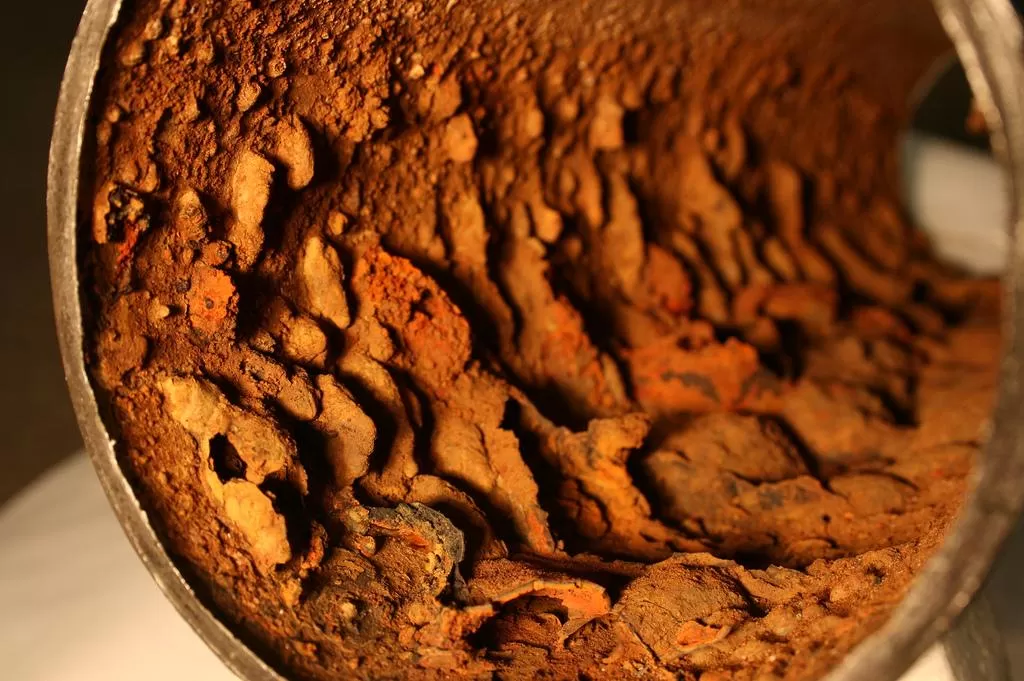
No matter how advanced the pipeline material is, continuous exposure to harsh chemicals takes a toll. Acid and alkali corrosion manifest as pitting, scaling, and severe rust on the internal diameter of the pipe. This localized chemical reaction accelerates wall thinning, fundamentally weakening the structural integrity of the pipeline until a microscopic pinhole leak develops.
Crystallization and Sediment Blockage
Many industrial chemicals are highly sensitive to thermal changes. If a heated pipeline experiences a sudden temperature drop, chemical crystallization occurs along the pipe walls. Over time, these solid deposit formations grow, acting like cholesterol in an artery. This causes severe flow restriction, forcing pumps to work harder and creating localized pressure traps that stress the pipe joints.
Weld Joint Degradation and Micro-Cracks
The weakest point of any pipeline is its weld seams. In high-pressure chemical systems, the continuous cycle of heating and cooling causes thermal expansion and contraction. This physical movement, combined with pressure fatigue, creates microscopic cracks along the heat-affected zones of the welds. These cracks are nearly invisible from the outside but are glaringly obvious when viewed through an internal HD inspection camera.
Leakage Risks in Hidden Pipeline Sections
The most dangerous leaks are the ones you cannot see. Many chemical pipelines run underground, through concrete walls, or inside enclosed industrial piping systems. When a leak occurs in these hidden sections, it can go unnoticed for months, quietly contaminating groundwater or eroding structural foundations.
Quick Reference: Pipeline Risk Matrix
| Corrosion & Thinning | Aggressive acid/alkali chemical reactions | High | Medium |
| Sediment Blockage | Thermal drops causing chemical crystallization | High | High |
| Weld Micro-Cracks | Thermal expansion & severe pressure fatigue | Critical | Extremely High |
| Hidden Leakage | Degraded joints in underground/enclosed areas | Critical | Extremely High |
How Industrial Chemical Pipeline Inspection Works
The integration of visual NDT technology has transformed pipeline maintenance from a highly disruptive construction project into a streamlined, surgical operation. Here is how a modern chemical pipeline inspection system is deployed in the field:
Step 1: Access Pipeline Entry Points
Because borescopes are highly flexible, technicians do not need to cut the pipe. Instead, they utilize existing system access points. This could be an open control valve, a designated inspection port, or a routine maintenance opening.
Step 2: Insert Industrial Borescope System
The technician carefully feeds the flexible probe into the pipeline. Because the environment may still contain chemical residues or toxic fumes, MAIYIS probes feature a rugged, chemical-resistant design and IP68 waterproof ratings, ensuring the camera lens and LED nodes are not degraded by the harsh atmosphere.
Step 3: Real-Time Internal Visualization
As the probe navigates through elbows and T-junctions, the HD camera imaging system goes to work. Supported by a brilliant LED illumination system, the dark interior of the pipe is illuminated, sending a crystal-clear, zero-latency video feed directly to the operator's real-time monitoring screen.
Step 4: Identify Defects and Record Data
The inspector scans the internal surface, conducting detailed corrosion mapping, blockage detection, and crack localization. Every millimeter of the inspection is recorded in high definition. This data is then used to generate compliance reports and predictive maintenance schedules.
Applications of Chemical Pipeline Inspection
The necessity of an industrial pipeline inspection camera system spans across multiple high-stakes sectors. Each industry faces unique chemical challenges:
Petrochemical Plants
In oil refineries and gas processing facilities, the integrity of refinery pipelines and volatile chemical transfer systems is paramount. Borescopes are used to inspect for sulfur-induced corrosion and verify that massive transport manifolds are free from explosive hydrocarbon buildup.
Pharmaceutical Manufacturing
Pharmaceuticals require absolute purity. Borescopes are essential for inspecting sterile liquid transport pipelines. Engineers look for microscopic pitting or biofilm buildup where bacteria could hide, ensuring that CIP (Clean-In-Place) and SIP (Sterilize-In-Place) contamination prevention systems are functioning flawlessly.
Industrial Processing Plants
In facilities manufacturing fertilizers, plastics, or pulp, heavy acid and alkali pipeline monitoring is a daily requirement. Borescopes ensure that the production line safety systems remain uncompromised, preventing highly corrosive materials from destroying the infrastructure.
Hazardous Waste Transport Systems
Facilities dealing with toxic fluid pipelines and chemical runoff must adhere to strict environmental protection agency (EPA) guidelines. Routine borescope inspections provide the necessary visual proof for environmental compliance inspection, ensuring that toxic waste reaches its destination without leaking into the water table.
Recommended MAIYIS Industrial Borescope Solutions for Chemical Pipeline Inspection
To meet the severe demands of the chemical industry, standard commercial cameras simply will not survive. MAIYIS has engineered a portfolio of industrial-grade visual diagnostic tools designed specifically for hazardous environments.
Industrial Borescope for Deep Chemical Pipeline Inspection
Best For: Long-distance chemical pipelines and complex underground industrial systems.
Key Features: This flagship system is built to go the distance. It features specialized corrosion-resistant probe materials (such as tungsten braiding or specialized polymer coatings) that withstand acidic environments. With its high-definition imaging system and robust push-cable, it offers exceptional long insertion capability, easily navigating hundreds of feet of pipeline without buckling.
Endoscope Camera Module for System Integration
Best For: OEM industrial inspection systems and automated, fixed monitoring platforms.
Key Features: For chemical plants looking to build permanent monitoring solutions, MAIYIS offers an embedded vision solution. This bare-bones, highly adaptable module is machine integration ready. Its customizable design allows facility engineers to integrate the camera directly into robotic pipe crawlers or automated valve monitoring stations.
Endoscope Application Solutions for Chemical Industry
Best For: Large enterprise inspection systems and customized industrial workflows.
Key Features: MAIYIS goes beyond selling hardware; we provide system-level solution integration. We work directly with chemical plant managers to develop industry-specific customization, creating scalable deployment strategies that standardize pipeline inspection across multiple global facilities.
Best For: Field technicians, mobile inspection teams, and fast-response chemical maintenance operations.
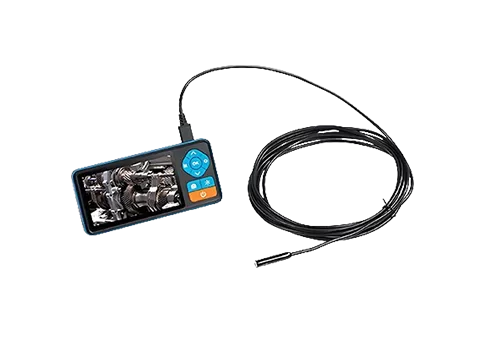
Key Features: The ips handheld digital endoscope is designed for portable industrial inspection in demanding chemical environments. Featuring an integrated HD display, ergonomic handheld operation, and real-time video recording capabilities, this compact inspection solution enables technicians to quickly diagnose corrosion, leakage points, valve degradation, and internal contamination inside chemical pipelines. Its rugged industrial construction and chemical-resistant probe materials make it ideal for on-site inspections requiring fast deployment and reliable performance in hazardous industrial conditions.
Benefits of Using Borescope for Chemical Pipeline Inspection
Shifting from reactive repairs to a proactive, visual maintenance strategy yields massive operational dividends.
Key Advantages Include:
Non-Destructive Inspection: In many cases, inspections can be performed with minimal or no system shutdown required.
Early Detection: Spotting a millimeter-deep corrosion pit today prevents a catastrophic pipe rupture tomorrow.
Reduced Chemical Exposure: Technicians can inspect dangerous environments remotely, drastically reducing human exposure to toxic substances.
Lower Maintenance Costs: Pinpointing the exact location of a crack means you only replace a small section of pipe, rather than tearing out the entire system.
Improved Safety Compliance: Recorded HD video provides undeniable proof to regulatory bodies that your facility is operating safely.
Comparison: Traditional vs. Borescope Inspection
| Traditional (Dismantling/Guesswork) | Low (Exposure risk) | Very High | Medium | Days to Weeks |
| MAIYIS Borescope Inspection | Extremely High | Low | High (Direct Visual) | Hours (or None) |
How to Choose the Right Chemical Pipeline Inspection Equipment
Selecting a chemical pipeline corrosion inspection tool is a critical engineering decision. The wrong equipment will dissolve in acid or fail under pressure. When procuring a borescope for chemical environments, evaluate these key selection factors:
Chemical Resistance Materials: Does the probe use standard rubber (which will melt), or specialized industrial polymers and tungsten alloys?
IP68 Waterproof Rating: Can the camera survive total immersion in thick, viscous chemical sludges?
High-Temperature Tolerance: Many chemical reactions are exothermic. The camera must withstand elevated temperatures without sensor failure.
Camera Resolution (HD/4K): To spot hairline micro-cracks on shiny metal, ultra-high resolution is non-negotiable.
Probe Flexibility & Diameter: The probe must be thin enough to enter small valves, yet flexible enough to corner 90-degree pipe elbows.
Data Recording Capability: Ensure the system can export MP4 video and high-res images for compliance auditing.
Why Choose MAIYIS for Industrial Chemical Pipeline Inspection Solutions
When dealing with hazardous chemicals, trust and reliability are paramount. Global chemical manufacturers partner with MAIYIS because we treat industrial safety with the uncompromising seriousness it deserves.
Quality You Can Trust
We build our instruments based on strict engineering standards. From the heavy-duty monitor housings to the sapphire glass protecting our camera lenses, we deliver rock-solid component reliability. Our tools are designed to provide consistent performance across the most hostile industrial environments on Earth.
Innovation-Driven Inspection Technology
The chemical industry evolves, and so do we. MAIYIS is dedicated to forward-looking industrial vision systems. Through continuous R&D innovation, we are constantly pushing the boundaries of advanced imaging technology, incorporating features like 3D measurement and AI-assisted defect recognition.
Integrity and Long-Term Cooperation
We don't just sell equipment; we build partnerships. MAIYIS operates on a transparent collaboration model, fostering global B2B partnerships. When you choose us, you receive long-term technical support, ensuring your inspection program remains cutting-edge for years to come.
Quality Control Excellence
To guarantee absolute safety, MAIYIS builds a full lifecycle QC system. This includes rigorous R&D phase inspection, meticulous production quality assurance on the assembly line, and strict delivery validation before shipping. Our singular goal is delivering zero-defect industrial vision solutions.
Social Responsibility Commitment
As a leader in industrial equipment, we recognize our broader impact. MAIYIS champions environmental protection initiatives by providing tools that prevent toxic spills. We invest in employee development programs, strictly adhere to ethical business operations, and strive to make a sustainable industry contribution.
MAIYIS Industrial Vision Solutions for Chemical Pipeline Inspection
Securing the integrity of your chemical transport systems is the foundation of operational safety. Rely on MAIYIS to be your "eyes inside the pipeline."
Explore the MAIYIS Product Categories:
Industrial Borescope: Rugged, ready-to-deploy systems for immediate field inspection.
Endoscope Camera Module: Highly adaptable cores for automated machinery.
Endoscope Application Solutions: Enterprise-grade, customized diagnostic workflows.
Veterinary Endoscopes: Showcasing our deep, cross-technology imaging expertise.
Frequently Asked Questions (FAQ)
Q: Can MAIYIS borescopes withstand highly acidic or alkaline chemical environments?
A: Yes. We offer specialized probes constructed with industrial-grade polymers, titanium, and tungsten braiding designed specifically to resist aggressive chemical corrosion, ensuring the equipment survives prolonged exposure during inspection.
Q: Do I need to drain and dry the chemical pipeline before inserting the borescope?
A: Not necessarily. Our industrial pipeline inspection cameras carry an IP68 waterproof rating. They can be safely submerged in various liquid chemicals, sludges, and industrial wastewater, allowing for rapid inspection without extensive pre-cleaning. (Note: Always verify chemical compatibility with our engineering team).
Q: How do we document the corrosion inside the pipeline for safety compliance?
A: MAIYIS industrial borescopes feature integrated recording systems. Technicians can capture high-definition photos and record real-time videos of the pipeline's interior. This media can be easily exported via USB or SD card to generate comprehensive, undeniable compliance and safety reports.
Q: Can the borescope navigate through 90-degree bends in a complex piping network?
A: Absolutely. Our insertion tubes are engineered with the perfect balance of push-strength and flexibility. Furthermore, our articulating probe tips allow the operator to steer the camera head in multiple directions, easily navigating elbows, T-junctions, and complex valve structures.