Beneath our streets, inside our commercial facilities, and under the foundations of our homes lies a complex, invisible network of pipelines. These drainage systems are the unsung heroes of modern infrastructure, safely carrying away wastewater and preventing catastrophic flooding. However, because they are out of sight, they are often out of mind—until a severe blockage occurs.
When a pipe backs up, the consequences are immediate and costly: flooded factory floors, foul odors in luxury hotels, or hazardous municipal sewer overflows. In the past, locating the exact source of a clog meant destructive digging, tearing up concrete floors, and enduring days of system downtime. Today, advanced drain inspection and clogged pipe inspection techniques have fundamentally changed the maintenance landscape.
By utilizing a high-definition pipe inspection camera or an industrial borescope, maintenance professionals can perform rapid, non-destructive underground pipe blockage detection. MAIYIS is at the forefront of this visual diagnostic revolution, providing industry-leading endoscopic imaging technology to ensure that hidden drainage problems are solved swiftly, accurately, and cost-effectively.
Why Drain & Clogged Pipe Inspection Matters in Modern Infrastructure
The operational integrity of modern society heavily depends on uninterrupted fluid transport. The challenge is that drainage systems operate in harsh, underground, and highly corrosive environments. Over time, these systems inevitably suffer from degradation and blockages.
Without proactive drainage system maintenance, minor flow restrictions quickly escalate into full-scale pipe ruptures. This is particularly critical across several key sectors:
Municipal Drainage Systems: City sewer networks must handle millions of gallons of waste daily. A single collapsed mainline can cause street flooding and severe environmental contamination.
Commercial Building Plumbing: In places like hotels, restaurants, and shopping malls, plumbing failures directly impact customer experience and can lead to immediate business closures.
Industrial Wastewater Pipelines: Factories deal with aggressive chemical runoffs and heavy sludge. A clogged drain here means halting entire production lines, leading to immense financial losses.
Residential Sewer Networks: Homeowners frequently battle stubborn clogs that back up raw sewage into living spaces, causing health hazards and expensive property damage.
The core pain points across all these scenarios are identical: frequent pipe blockage, hidden debris accumulation, stubborn fat and grease buildup, relentless tree root intrusion, and sudden structural pipe collapses. By adopting regular clogged drain inspection protocols using industrial borescopes, facility managers can shift from reactive panic to proactive prevention.
Common Causes of Drain & Pipe Blockage
To effectively clear a blockage, technicians must first understand exactly what is choking the pipe. Different environments breed different types of clogs, and blindly using a mechanical snake can sometimes cause more damage than good.
Accumulated Grease and Organic Waste
In commercial kitchens, restaurants, and food processing plants, fats, oils, and grease (FOG) are the primary culprits. When hot grease is poured down a drain, it cools and solidifies within the pipes, creating a sticky trap for other organic waste. In industrial wastewater systems, fat buildup can calcify into rock-hard masses that completely choke the pipeline, causing severe flow restriction.
Foreign Object Blockage
Not all blockages are organic. During construction or renovation, construction debris like cement slurry, gravel, or accidental tool loss can easily enter open drainage lines. In residential and commercial settings, solid waste intrusion—such as flushed sanitary products, paper towels, and children's toys—frequently creates sudden, impenetrable bottlenecks in the sewer line.
Pipe Structural Damage
Sometimes the pipe itself is the problem. Ground settling, heavy traffic vibrations, or simply aging infrastructure can cause pipes to crack or joints to become misaligned. These jagged structural defects act as a net, trapping sediment, toilet paper, and debris until a total blockage forms.
Root Intrusion in Underground Pipes
Tree roots are naturally drawn to the moisture and nutrients found inside sewer lines. They can penetrate through microscopic cracks or loose pipe joints. Once inside, they grow rapidly into massive, hair-like nets that completely block water flow. If left unchecked, root intrusion in underground pipes will eventually expand and rupture the pipe, requiring complete excavation.
Blockage Causes & Impact Comparison
| Grease Buildup | Gradual flow restriction & odor | Medium | High |
| Root Intrusion | Severe blockage & pipe rupture | High | Critical |
| Sediment / Debris | Slow drainage & pipe settling | Low | Medium |
| Structural Cracks | Soil erosion & recurring clogs | High | Critical |
How Drain & Clogged Pipe Inspection Works with Industrial Borescope
The integration of industrial borescopes into plumbing maintenance has established a highly efficient, Non-Destructive Testing (NDT) protocol. Here is the step-by-step process of how modern technicians tackle pipe diagnostics:
Step 1: Insert Inspection Camera into Drain Opening
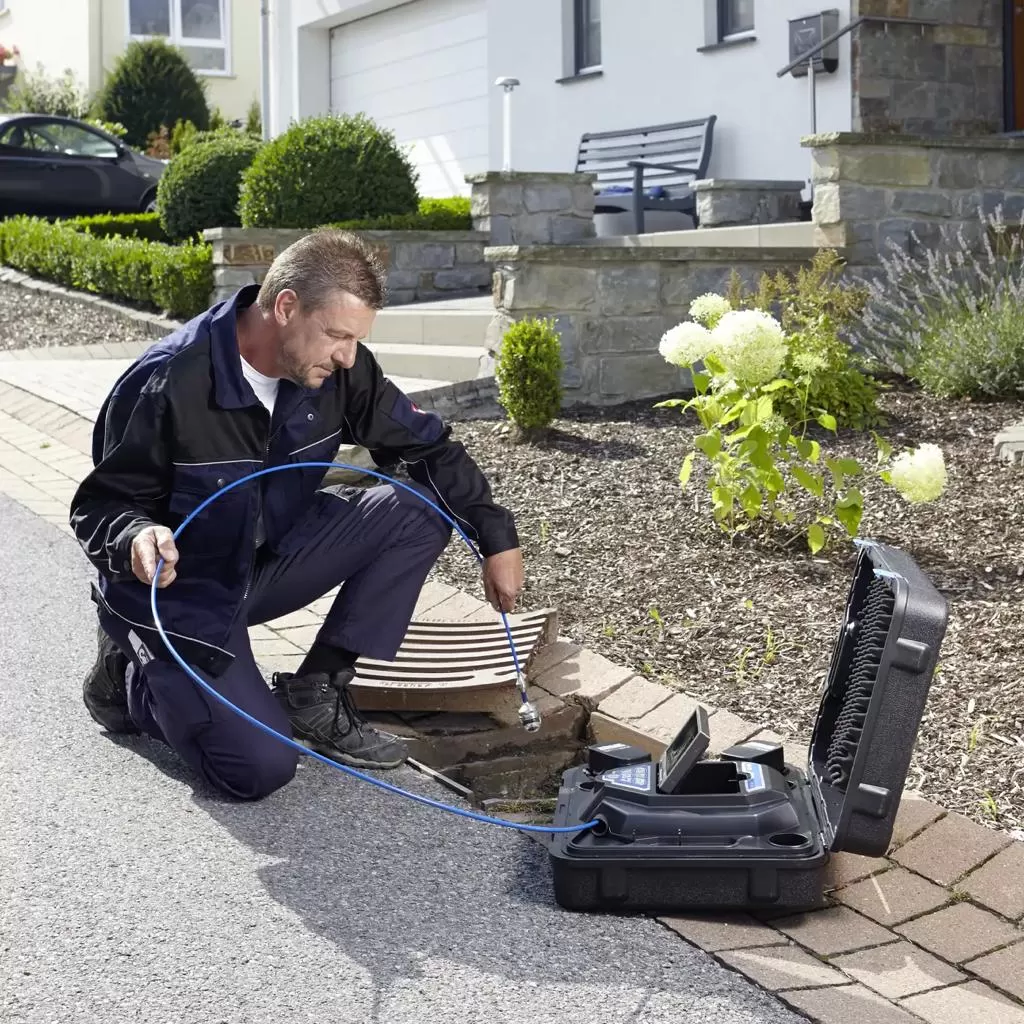
The most significant advantage of a sewer borescope inspection is that no excavation is required. The technician simply locates an existing access point—such as a cleanout, manhole, or sink drain. A flexible, waterproof probe is then fed directly into the dark, flooded pipe, effortlessly navigating around 90-degree bends and P-traps.
Step 2: Real-Time Video Inspection
As the probe travels deeper, it transmits high-definition imaging back to the operator's monitor. Because pipes are pitch-black, MAIYIS borescopes are equipped with ultra-bright, adjustable LED illumination at the camera tip, cutting through murky water to provide a crystal-clear, live monitoring experience on the screen.
Step 3: Identify Blockage or Damage
With eyes inside the pipe, the technician plays the role of an underground detective. Using the pipe clog detection tool, they can locate the exact position of the clog, visually identify its composition (e.g., grease vs. roots), and detect any hidden cracks, collapses, or pipe deformation surrounding the blockage area.
Step 4: Record & Analyze Inspection Data
Professional diagnostics require proof. Modern drain inspection cameras allow for continuous video recording and image capture. This visual data is crucial for generating comprehensive maintenance reporting for clients, proving the necessity of specific repairs, and formulating an accurate repair planning strategy before a single wrench is turned.
Applications of Drain & Clogged Pipe Inspection
The versatility of modern endoscopic imaging technology makes it indispensable across various sectors.
Municipal Sewer Systems
City planners and municipal engineering teams rely heavily on heavy-duty borescopes for city drainage inspection. By routinely mapping underground pipeline conditions, municipalities can prevent catastrophic sewer collapses, monitor aging infrastructure, and conduct precise underground pipeline maintenance without shutting down major traffic intersections.
Commercial Buildings
In hospitality and retail (hotels, shopping malls, office towers), maintaining a hygienic environment is non-negotiable. Borescopes are used to swiftly diagnose backed-up floor drains in industrial kitchens or public restrooms, allowing maintenance crews to clear the issue during off-hours with zero disruption to guests.
Industrial Facilities
Manufacturing plants deal with hazardous chemicals and thick sludge. Regular inspection of chemical wastewater systems and manufacturing drainage pipelines using corrosion-resistant industrial borescopes ensures that toxic leaks do not contaminate the surrounding soil and that the facility remains compliant with environmental regulations.
Residential Plumbing Systems
For local plumbers, an inspection camera is a daily necessity. It is used for apartment drainage inspection and household pipe blockage diagnosis, saving homeowners thousands of dollars by pinpointing a clog under the yard without having to dig up their beautifully landscaped gardens.
Recommended MAIYIS Drain Inspection Solutions
As a leading innovator in visual diagnostic technology, MAIYIS provides a robust product matrix designed to tackle every drainage challenge—from narrow residential pipes to massive city sewers.
Industrial Borescope for Deep Drain & Sewer Inspection
Ideal for: Long-distance pipelines, municipal underground sewer systems, and heavy industrial wastewater networks.
Key Features: Designed for extreme environments, this system features a high-strength push rod capable of spanning vast distances without buckling. It is equipped with a premium HD imaging system and a rugged IP68 waterproof design, ensuring flawless operation even when fully submerged in raw sewage.
Handheld Pipeline Inspection System for Field Technicians
Ideal for: Rapid maintenance, commercial plumbing, and on-site troubleshooting.
Key Features: Built for agility, this portable design integrates the camera, cable, and HD screen into one ergonomic unit. It offers fast deployment, allowing a single technician to arrive on-site, turn on the device, and diagnose a floor drain blockage in a matter of minutes.
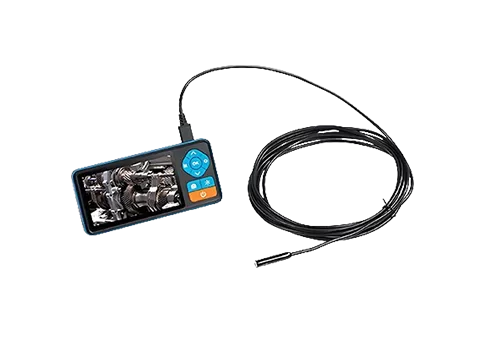
USB Borescope Camera for Light Drain Inspection
Ideal for: Residential plumbing, HVAC condensate lines, and small-scale drainage systems.
Key Features: This is our most cost-effective solution. With a simple plug-and-play interface, the USB camera connects directly to a technician's smartphone, tablet, or PC. It is the perfect tool for quick, everyday household pipe blockage diagnosis.
Benefits of Using Camera-Based Drain Inspection
Transitioning from blind, traditional pipe snaking to visual, camera-based drain inspection provides immense operational and financial benefits:
No Excavation Required: Preserves landscapes, concrete floors, and road surfaces.
Faster Blockage Detection: Eliminates guesswork; you see exactly what the problem is in minutes.
Lower Maintenance Cost: You only pay to fix the exact section of the pipe that is damaged.
Accurate Repair Positioning: Integrated transmitters can precisely locate the camera head underground.
Reduced Downtime: Commercial operations can resume faster when diagnostics are swift.
Traditional vs. Modern Inspection Methods
| Traditional Digging / Guesswork | Low (Requires hours of labor) | Extremely High | Medium (Often trial and error) | Severe |
| Borescope Visual Inspection | Very High (Instant video feed) | Low | Flawless (Visual confirmation) | Minimal to None |
How to Choose the Right Drain Inspection Equipment
Selecting the appropriate pipe inspection camera is critical for operational success. Here are the key factors you must evaluate: pipe diameter compatibility, cable length & flexibility, waterproof rating (IP68 recommended for drains), camera resolution (720p/1080p/4K), and overall portability.
Equipment Selection Flowchart
To simplify your procurement process, follow this basic decision matrix:
Step 1: Determine the Pipe Diameter
Small pipes (1-2 inches):Choose USB Borescope Camera (Flexible, narrow probe) or portable endoscope camera for quick handheld inspections in tight residential spaces.
Medium pipes (3-6 inches): Choose Handheld Pipeline System (Balanced rigidity and flexibility).
Large mains (6+ inches): Choose Heavy-Duty Industrial Borescope (Self-leveling camera, strong push rod).
Step 2: Evaluate the Required Cable Length
Step 3: Assess the Environment
Why Choose MAIYIS for Drain & Pipe Inspection Solutions
When the integrity of vital infrastructure is at stake, professionals cannot rely on subpar equipment. MAIYIS stands out as a global leader in endoscopic imaging technology, delivering solutions that industry experts trust.
Quality You Can Trust
We adhere to stringent manufacturing standards to ensure every borescope survives the harshest environments. From the initial design phase to final assembly, our lifecycle QC system provides consistent performance assurance, guaranteeing that your camera won't fail when you are 30 meters deep in a sewer pipe.
Innovation-Driven Inspection Technology
The core of MAIYIS is our Endoscopic Imaging Technology R&D center. We continuously invest in advanced industrial imaging systems, pushing the boundaries of what is visually possible underground. Our forward-looking inspection solutions include self-leveling camera heads, integrated sondes for location tracking, and enhanced HD clarity.
Integrity & Long-Term Partnership
We believe in transparent collaboration. MAIYIS has built a reliable global supply chain that empowers distributors, municipalities, and plumbing franchises alike. We focus on long-term B2B cooperation, ensuring our partners always have access to top-tier equipment and dedicated technical support.
Quality Control Excellence
MAIYIS builds a full lifecycle QC system to maintain our industry-leading reputation:
R&D Quality Control: Rigorous stress-testing of new imaging technologies.
Production Monitoring: Precision calibration on the assembly line.
Delivery Inspection: Every unit is water-tested and optically verified before shipping.
The ultimate goal? Delivering zero-defect industrial vision solutions.
Social Responsibility Commitment
We are deeply committed to ethical operations. Our initiatives focus on environmental protection (by helping industries prevent toxic pipeline leaks), continuous employee development, and active community contribution.
MAIYIS Product Categories for Drain Inspection Solutions
Beyond drainage, our technological expertise spans multiple sectors:
Conclusion – Smarter Drain & Clogged Pipe Inspection with Industrial Borescope Technology
Drain inspection is critical for modern infrastructure. Allowing pipes to deteriorate until they completely block or collapse is a recipe for financial and environmental disaster. Traditional methods of blind snaking and destructive digging are inefficient, disruptive, and overly costly.
Industrial borescopes have ushered in a new era of proactive maintenance. They provide fast, highly accurate, and non-destructive diagnostics that empower technicians to see the unseen, locate exact blockage points, and execute precise repairs with minimal downtime.
Frequently Asked Questions (FAQ)
Q: Can the borescope camera see clearly through muddy or highly contaminated wastewater?
A: MAIYIS drain inspection cameras are equipped with ultra-bright, adjustable LED lighting designed to cut through dark and murky environments. While heavy suspended mud can obscure vision, the camera is fully waterproof (IP68) and can easily be pushed past the murky standing water to inspect the blockage point.
Q: How far can an industrial borescope reach inside an underground sewer pipe?
A: It depends on the model. For residential and commercial use, handheld systems typically reach 10 to 30 meters. For municipal and deep industrial sewer inspections, our heavy-duty push-rod borescopes can easily navigate pipelines exceeding 50 to 100 meters in length.
Q: Is it possible to locate the exact position of the camera head above ground?
A: Yes! Many of our advanced pipe inspection cameras feature built-in 512Hz sondes (transmitters). A technician above ground can use a locator wand to track the exact location and depth of the camera head, allowing them to mark precisely where the floor needs to be cut for repair.
Q: Are MAIYIS borescopes capable of passing through 90-degree pipe bends?
A: Absolutely. Our camera probes and insertion cables are engineered with an optimal balance of rigidity (to push long distances) and flexibility. They are specifically designed to smoothly navigate P-traps and 90-degree elbows common in standard drainage systems.