Hydraulic systems are the unquestionable muscle of modern industry. From the colossal excavators reshaping our landscapes to the highly precise aerospace actuators guiding commercial flights, hydraulic technology provides the immense power and exact control required for the world's most demanding applications. These systems act as the "power nervous system" of heavy machinery, relying on pressurized fluid to transmit force efficiently.
However, the incredible power of hydraulic machinery comes with a significant vulnerability: precision. The internal components of a hydraulic system—cylinders, valves, pumps, and high-pressure hoses—are machined to microscopic tolerances. Because these critical components are completely sealed within thick metal casings and high-pressure lines, determining their internal health has historically been a game of blind guesswork. When a machine loses power or hydraulic pressure fluctuates, traditional maintenance often requires dismantling the entire system, leading to massive fluid spills, excessive labor costs, and crippling operational downtime.
Today, advanced hydraulic system inspection has evolved. By utilizing high-definition industrial borescope technology, maintenance engineers can perform non-destructive hydraulic failure diagnosis, peering directly into the heart of the system without turning a single wrench. This comprehensive guide explores why internal hydraulic diagnostics are critical, the hidden problems they uncover, and how MAIYIS industrial vision solutions empower professionals to keep their hydraulic equipment running safely and efficiently.
Why Hydraulic System Inspection Is Critical for Industrial Equipment Reliability
To understand the necessity of specialized visual inspection, one must first understand the stakes. When a hydraulic system fails, the entire machine stops. There is no "limp mode" when a main hydraulic cylinder blows a seal or a directional control valve jams.
Hydraulic systems are the driving force behind:
Excavators and Earthmoving Equipment: Moving tons of earth under extreme, dust-filled conditions.
Injection Molding Machines: Applying thousands of tons of clamping force with millimeter precision.
Industrial Presses: Stamping and forming high-tensile steel in automotive manufacturing.
Aerospace Actuators: Controlling the wing flaps and landing gear of commercial airliners.
Marine Hydraulic Systems: Operating massive ship steering gears and cargo winches in corrosive saltwater environments.
Why is internal inspection an absolute must? Because hydraulic issues do not repair themselves; they cascade. What begins as minor internal leakage or a degraded O-ring seal eventually leads to severe pressure instability. Contamination of hydraulic oil by microscopic metal shavings will act like liquid sandpaper, aggressively destroying every valve and pump it circulates through.
A proactive hydraulic pipeline inspection camera allows technicians to visually confirm the integrity of seals, check for fluid degradation, and spot early-stage valve failure. This visual confirmation shifts hydraulic maintenance from an expensive reactive emergency to a highly controlled, predictable, and cost-effective process.
Common Problems in Hydraulic Systems
When a hydraulic system underperforms, the root cause is almost always hidden inside the pressurized lines. When technicians guide an industrial borescope into a hydraulic circuit, they are conducting a forensic investigation. Here are the most common and destructive problems they uncover:
Hydraulic Oil Contamination
Contamination is the silent killer of hydraulic systems, responsible for over 75% of all hydraulic failures. While external filters catch large debris, microscopic metal particles from normal component wear often circulate freely. Furthermore, dust ingress from failing wiper seals and chemical fluid degradation (oxidation) create a dark, sludgy environment. A borescope inserted into a hydraulic reservoir or manifold will easily reveal this cloudy, particle-rich fluid and the damaging sludge building up in the corners of the system.
Internal Leakage in Cylinders
A hydraulic cylinder converts fluid power into mechanical motion. For this to work efficiently, the piston seals must completely separate the pressurized fluid chambers. Over time, friction and heat cause severe seal wear. When a seal degrades, fluid bypasses the piston. This internal leakage results in a massive pressure loss, causing the cylinder to drift under load and drastically reducing the machine's lifting efficiency. A borescope can visually inspect the cylinder walls for scoring and confirm the exact condition of the internal seals.
Valve Blockage or Failure
Directional control valves and pressure relief valves are the "brain" of the hydraulic circuit, directing fluid exactly where it needs to go. These valves utilize precisely machined spools that slide back and forth. If a single piece of hard debris wedges between the spool and the valve body, it causes spool valve sticking. This hydraulic flow restriction can cause a machine's arm to lock up or result in dangerous, uncontrollable movements.
Hose and Pipeline Cracks
Hydraulic fluid does not flow gently; it pulses violently with every stroke of the pump. This continuous pulsation creates severe pressure fatigue in the rubber hoses and metal pipelines. Over thousands of hours, this fatigue leads to internal delamination (where the inner lining of the hose tears away and blocks fluid) or micro-cracks in rigid metal lines, posing a massive risk for high-pressure external blowouts.
Quick Reference: Hydraulic Defect Matrix
| Oil Contamination | Particle ingress & Fluid degradation | Accelerated system wear | High |
| Seal Failure / Leakage | Heat, aging, and friction | Pressure loss & Load drift | Critical |
| Valve Blockage | Debris jamming the spool | System failure / erratic movement | High |
| Pipeline Cracks | Pressure fatigue & Vibration | Internal blockage or external blowout | Critical |
How Hydraulic System Inspection Works with Industrial Borescope
Executing a hydraulic failure diagnosis using an industrial borescope is a surgical procedure. It eliminates the need to drain hundreds of gallons of expensive hydraulic oil just to "guess" which component is failing. Here is the highly efficient, step-by-step workflow:
Step 1: Access Hydraulic Inspection Points
The technician first ensures the system is fully depressurized to guarantee absolute safety. They then locate non-invasive entry points. This could be a hydraulic fluid reservoir cap, a removed sensor port, disconnected hydraulic ports on a manifold block, or standard maintenance openings.
Step 2: Insert Flexible Borescope Probe
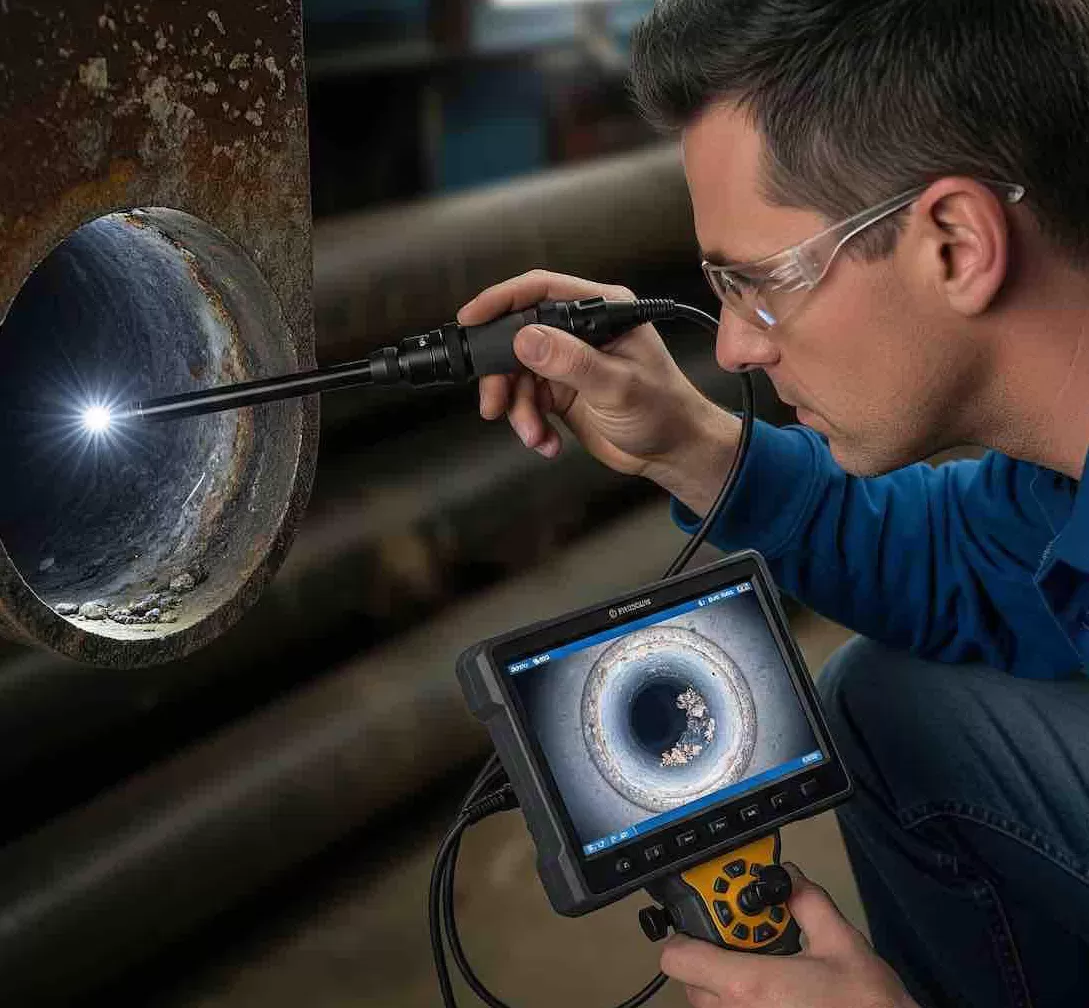
Once the port is open, the technician feeds the flexible, oil-resistant probe directly into the hydraulic lines. Utilizing advanced articulation (steering) controls on the handle, the operator can navigate through complex 90-degree pipe elbows and reach deep internal components, such as the bottom of a massive lift cylinder or the inner chambers of a valve block.
Step 3: Real-Time Internal Visualization
Hydraulic lines are pitch-black cavities. The borescope’s ultra-bright LED illumination system immediately floods the area with light. The HD camera imaging system captures the internal surfaces, bypassing the dark hydraulic fluid, and transmits a crystal-clear, zero-latency feed to the live monitoring display in the technician's hands.
Step 4: Identify Faults and Abnormal Conditions
With eyes inside the machine, the technician conducts a thorough evaluation. They assess contamination levels in the fluid, look for scoring or severe seal damage inside the cylinder tubes, and check for internal corrosion or rust caused by water ingress in the hydraulic oil.
Step 5: Record & Analyze Inspection Data
Visual proof is the foundation of modern maintenance. The borescope allows for high-definition video recording and image capture. This vital data is extracted to create comprehensive maintenance reporting, validating warranty claims for failed pumps, and providing actionable intelligence for predictive maintenance support.
Applications of Hydraulic System Inspection
Because hydraulic power is the standard for heavy lifting and precision force, the need for robust hydraulic system inspection spans across the world's most vital industries.
Construction Machinery
In the dirt and grit of a construction site, excavators, heavy loaders, and cranes face relentless abuse. Borescopes are used daily by heavy equipment mechanics to inspect the massive boom cylinders for internal bypass leaks, ensuring the crane can safely hold a suspended load without drifting.
Industrial Manufacturing Equipment
Factories operate on tight schedules where downtime costs thousands of dollars per minute. Maintenance teams use borescopes to inspect the hydraulic presses stamping automotive parts and the injection molding machines creating consumer plastics, ensuring the hydraulic manifolds are free from microscopic clogs.
Aerospace Hydraulic Systems
In aviation, hydraulic failure is not an option. Aerospace technicians use highly specialized, ultra-thin borescopes to inspect the aircraft actuators that control flight surfaces and the complex hydraulic manifolds of landing gear systems, demanding absolute zero-defect performance.
Marine Hydraulic Systems
The ocean is an incredibly harsh, corrosive environment. Marine engineers rely on industrial borescopes to conduct deep inspections of ship steering systems, cargo hatches, and offshore hydraulic equipment, ensuring that saltwater has not breached the hydraulic seals to cause internal rusting.
Recommended MAIYIS Solutions for Hydraulic System Inspection
Standard commercial inspection cameras will dissolve or short-circuit within minutes when exposed to the highly caustic nature of synthetic hydraulic fluids. MAIYIS has engineered a portfolio of industrial-grade visual diagnostic tools explicitly designed for fluid power professionals.
Industrial Borescope for Deep Hydraulic System Inspection
Best For: Long hydraulic pipelines, heavy-duty excavators, and complex industrial manufacturing systems.
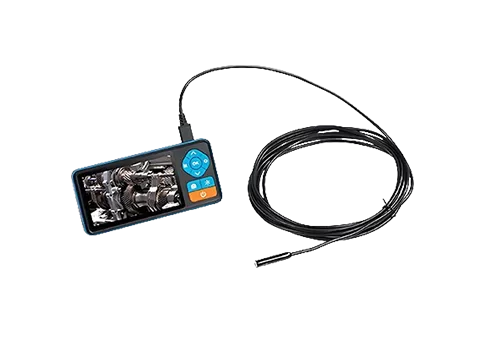
Key Features: This is our flagship heavy-duty system. It boasts an uncompromising oil-resistant probe (IP67/IP68) constructed from specialized polymers and tungsten alloys that easily withstand synthetic hydraulic fluids. Featuring high-definition imaging and a flexible insertion design with 360-degree articulation, it effortlessly navigates deep into complex hydraulic manifolds.
Handheld Inspection System for Field Maintenance Teams
Best For: Construction equipment repair, mobile mechanics, and fast on-site diagnostics.
Key Features: Built for the technician in the trench. This all-in-one IPS handheld digital endoscope design integrates the camera, lighting, and an HD display into a single rugged unit. It offers incredibly fast deployment—allowing a mechanic to diagnose a failing cylinder on a muddy job site without setting up delicate external monitors or laptops.
Endoscope Camera Module for OEM Integration
Best For: Hydraulic system manufacturers, custom machinery builders, and smart condition monitoring systems.
Key Features: For companies looking to build "smart hydraulics," MAIYIS provides an embedded vision solution. This automation integration ready module allows engineers to permanently install high-definition micro-cameras inside hydraulic reservoirs or massive valve blocks, providing 24/7 customizable configuration and continuous visual condition monitoring.
Benefits of Hydraulic System Inspection Using Borescope Technology
Transitioning from the outdated "tear down and inspect" method to proactive visual non-destructive testing (NDT) provides an overwhelming competitive and financial advantage to any maintenance program.
Key Advantages Include:
No System Disassembly Required: Keep the hydraulic lines sealed. Inspect internal components without draining hundreds of liters of expensive, environmentally hazardous hydraulic oil.
Faster Fault Detection: Pinpoint the exact jammed valve or blown seal in minutes, not days.
Reduced Downtime: Machines are diagnosed rapidly and returned to the production line or construction site with minimal delay.
Lower Maintenance Costs: Only purchase replacement parts for the specific component that is visually confirmed to be failing.
Improved Predictive Maintenance Capability: Record the internal wear of a cylinder over time, predicting exactly when the seal will fail so you can replace it during a scheduled holiday shutdown.
Comparison: Traditional Teardown vs. Borescope Inspection
| Full Hydraulic Teardown | Extremely High | Days to Weeks | High | Severe |
| MAIYIS Borescope Inspection | Low | Minutes | High (Visual Proof) | Minimal to None |
How to Choose the Right Hydraulic Inspection Equipment
Procuring the correct hydraulic pipeline inspection camera is a critical decision. Hydraulic systems are unique, fluid-filled environments. Evaluate these key selection factors to ensure you choose the right tool:
Oil Resistance Capability: The absolute most critical factor. The probe material must be chemically rated to withstand prolonged exposure to standard hydraulic oil (AW32, AW46) and synthetic, fire-resistant fluids without the lens fogging or the cable melting.
Probe Flexibility & Diameter: The camera must be thin enough to pass through standard JIC or ORFS hydraulic fittings (often under 6mm) yet flexible enough to snake through hose bends.
Camera Resolution (HD/4K): Clear imaging is required to spot microscopic scoring on a shiny metal cylinder wall through residual oil.
Pressure & Temperature Tolerance: While inspections are done depressurized, residual heat remains. The camera must withstand high temperatures.
Insertion Length: A standard valve block may only need a 1-meter probe, while inspecting the boom lines of a crane may require 5 meters or more.
Data Recording Function: Ensure the system can capture MP4 videos to attach to digital maintenance work orders.
Why Choose MAIYIS for Hydraulic System Inspection Solutions
When an incorrect diagnosis can result in a catastrophic equipment failure, severe oil spills, or compromised worker safety, global industries do not compromise on their tools. MAIYIS is trusted by fluid power professionals worldwide because of our relentless dedication to quality.
Quality You Can Trust
Our borescopes are built upon strict precision engineering standards. We understand these tools will be dropped, covered in grease, and submerged in hydraulic fluid. MAIYIS equipment is engineered to deliver stable performance under harsh conditions, providing rock-solid industrial reliability for years.
Innovation-Driven Technology
We are pioneers in advanced machine vision systems. Through massive and continuous R&D innovation, MAIYIS consistently brings future-oriented inspection solutions to the market, such as ultra-bright lighting systems that can cut through cloudy hydraulic fluid and highly responsive articulation joints.
Integrity and Global Partnerships
MAIYIS operates on a transparent collaboration model. We are dedicated to building long-term B2B relationships with heavy equipment manufacturers, repair franchises, and industrial distributors. Our robust global supply capability ensures you have the tools you need, exactly when you need them.
Quality Control Excellence
To guarantee absolute perfection, MAIYIS builds a full lifecycle QC system:
R&D Inspection Control: Rigorous stress-testing of probes in boiling hydraulic fluids.
Production Quality Assurance: Meticulous optical calibration on the assembly line.
Final Delivery Validation: Every unit is water/oil tested and checked for articulation fluidity before shipping.
Our ultimate goal: ensuring zero-defect industrial vision solutions.
Social Responsibility Commitment
We believe in doing business the right way. MAIYIS is deeply committed to environmental sustainability (helping companies prevent toxic hydraulic leaks), employee development, community contribution, and strictly ethical manufacturing practices.
MAIYIS Industrial Vision Solutions for Hydraulic System Inspection
Visualizing the internal health of a hydraulic system is the ultimate advantage for any mechanical reliability engineer. MAIYIS provides the optical clarity, chemical durability, and mechanical precision required to keep the world's most powerful machines operating flawlessly.
Explore MAIYIS Product Categories:
Industrial Borescope: Heavy-duty, articulating systems for complex hydraulic and mechanical diagnostics.
Endoscope Camera Module: Customizable imaging cores for OEM integration and condition monitoring.
Endoscope Application Solutions: Enterprise-grade diagnostic workflows for heavy industry.
Veterinary Endoscopes: Showcasing our deep, cross-industry imaging technology expertise.
Frequently Asked Questions (FAQ)
Q: Will hydraulic fluid (oil) damage or cloud the borescope camera lens?
A: No. MAIYIS industrial borescopes are engineered specifically for fluid power applications. Our camera lenses are protected by scratch-resistant sapphire glass, and the probes are constructed from specialized oil-resistant materials with an IP67/IP68 rating, ensuring they remain perfectly clear and fully functional even when totally submerged in hydraulic fluid.
Q: Do I need to drain the entire hydraulic system before using the borescope?
A: Not entirely. While the system must be completely depressurized for safety before opening any lines, you do not need to drain all the fluid. As long as the fluid level is dropped just below your access port, you can insert the borescope. Our ultra-bright LEDs are designed to illuminate the internal components even if residual oil coats the walls.
Q: Can the camera see internal scratches inside a hydraulic cylinder?
A: Yes. One of the primary uses of our high-definition borescopes is to inspect the honed walls of hydraulic cylinders. The HD resolution, combined with adjustable lighting, allows technicians to clearly identify microscopic vertical scoring, rust, or seal degradation that is causing internal pressure bypass.
Q: How small of a hydraulic fitting can the borescope pass through?
A: MAIYIS offers a variety of probe diameters tailored for hydraulic systems. Our ultra-thin articulating probes (ranging from 4mm to 6mm) are designed to slide effortlessly through standard hydraulic diagnostic ports, quick-disconnect fittings, and narrow valve block galleries without getting stuck.